





Free written scope consultation - allowances, timeline, and change-order rules on paper before a single trade is scheduled
Caesarstone Roofing: The Houston Owner’s Guide
If you’re searching for Caesarstone roofing parts in Houston, you’re likely dealing with a failing underlayment, edge flashing, or seam seal that was installed with a Caesarstone surface and has now become the leak point. We stock Caesarstone-compatible roofing sealant systems, expansion joints, and edge-flashing kits, and most replacements run between $400 and $1,800 installed depending on whether we’re repairing an isolated seam or reflashing an entire counter-to-wall transition. This is the page that tells you exactly what fails, what it costs in Houston’s climate, and what we do differently when we fix it.
Here’s the honest picture from job sites across the Houston area: Caesarstone quartz surfaces are non-porous, so the surface itself doesn’t leak. What fails is the transition point between the Caesarstone and the structure around it: the waterproof caulk line at the backsplash, the flashing at a roof-to-counter connection, or the bond line at an expansion joint. In Houston’s heat-and-humidity cycle, those bond lines move more than the quartz does, and that differential movement is exactly where every failure starts. Homeowners usually discover the problem as a slow stain on the Sheetrock below, a musty smell inside a cabinet, or water beading on the face of a framed wall after a hard rain.
We’re an independent Houston remodeling contractor, not affiliated with Caesarstone. We do, however, work with Caesarstone daily, and we carry materials on our trucks that match what Caesarstone fab shops use. That matters when you need a matched repair, not a generic caulk line that won’t hold.
Which Caesarstone Models This Applies To
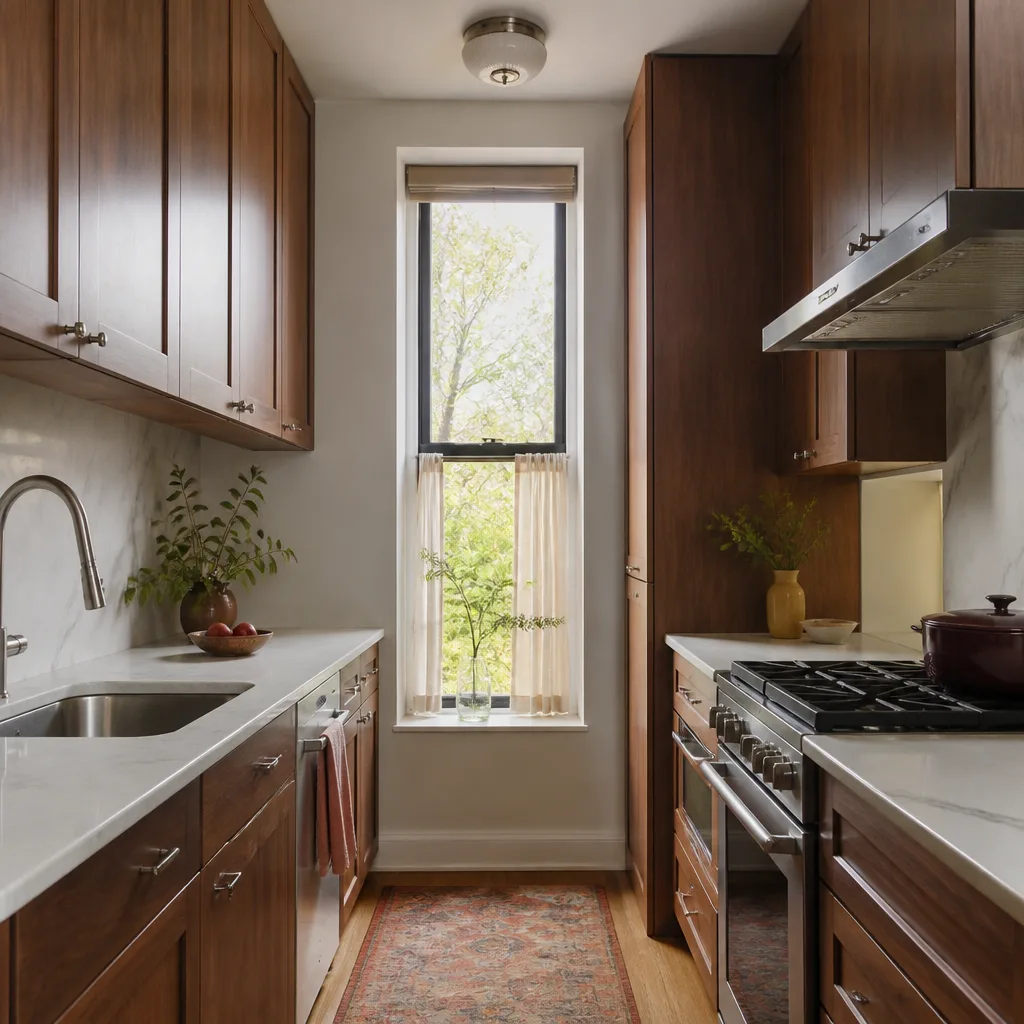
For roofing-adjacent work, the Caesarstone slab itself is not the part that fails. The failure happens at the seams, joints, and transitions where the quartz surface meets the wall, the deck, the roof penetration, or the window sill. That applies to every Caesarstone series in circulation: the Classico line, the Supernatural line, and the Outdoor Collection, which Houston homeowners often spec for outdoor kitchens and covered patios where roof drainage intersects the countertop.
The key to matching the right part is not the Caesarstone model number: it’s the joint width, the substrate material behind the caulk (cement board, plywood, or exterior sheathing), and the product family used at the original installation. Caesarstone-approved installations typically use a color-matched silicone or a two-part polyurethane sealant at every movement joint. If your repair sticker or invoice references a specific sealant lot or an embossed code on the back of the slab, we’ll use that to match.
On the OEM-vs-aftermarket question: Caesarstone does not manufacture the caulks, flashing, or bonding sealants you’ll need for a roof-to-surface repair. Those materials come from companies like Sika, Bostik, and DAP, and the same factory-spec cartridges are available direct. Good aftermarket equivalents exist, but Houston’s heat invalidates a lot of them. If the sealant isn’t rated for movement joints (Class 25, typically listed on the cartridge), it will crack inside its first Houston summer. That spec matters more than which distributor you buy it from.
Styles & brands we work with







Signs Your Caesarstone Roofing Is Failing
- Dark staining along the backsplash-to-counter seam. Water is wicking behind the caulk line and being held against the substrate behind the drywall. The caulk bead usually looks glossy and intact from the front, so this one gets missed until the stain shows.
- Caulk that has pulled away from the quartz edge. This is the telltale movement-joint failure, and it happens faster on walls that get direct afternoon sun. In Houston’s summer, the joint moves; the caulk either stretches or detaches. Once detached, it can’t reseal itself.
- Soft or swollen drywall below a wall-mounted Caesarstone splash. Water has been running behind the slab for weeks, feeding on the backside of the wallboard while the face stays painted. By the time it’s soft to the touch, you need joint repair plus drywall pull-and-replace.
- Musty odor inside a cabinet, especially a base cabinet under a sink or cooktop. The smell is coming from the dark, damp cavity behind the cabinet, not from the cabinet itself. That points to a roof-edge or parapet leak above, or a failed seam in the Caesarstone above that’s draining downward.
- Beaded water on the wall after rain, visible only for a day or two. Houston storm cycles are intense, and if the water shows up only during or after a hard rain, the leak is likely roof-side rather than appliance-side. But the joint between Caesarstone and roof flashing is a classic merge point, especially on covered patios and outdoor kitchens.
If any of these match what you’re seeing, the next five to ten minutes of damage are more about water volume than time. The sooner the joint is opened up and inspected, the less drywall and framing you’ll lose.
Replacement Cost & What’s Included

For Houston homeowners, a Caesarstone seam or flashing repair as it relates to roof-drainage intrusion typically runs $400 to $1,800 installed, based on our current pricing for residential work in the area. The low end covers a single movement-joint cut-and-recaulk with a color-matched, Class 25 sealant; the high end is a full roof-to-counter flashing replacement with pull-and-reset of the slab, new backer rod, and paint-damage touch-up around the repaired area.
| Scope of work | Houston installed price |
|---|---|
| Single seam reseal (movement joint only) | $400 – $700 |
| Multi-joint reseal plus substrate repair | $700 – $1,200 |
| Full reflashing at roof-to-counter transition | $1,200 – $1,800 |
If the job turns out to be part of a larger roof repair or roof replacement, Houston pricing for roof replacement runs $8,000 to $20,000, and roof repair runs $400 to $1,800, which tracks with the numbers above. We write the scope in plain language before we start: what we cut, what we seal, what we leave clean, and what the final line-item number is. Written price first, always. Our work is covered by the 365-Day Done Right Promise, and if the repair fails inside that year, we come back and fix it at no charge, including the service visit.
See the difference
 Before
 After
After Before
 After
After Before
 After
AfterDIY or Call Us?
You can inspect the joint lines yourself, and you should, because early detection is free. Run a utility light along the seams at night, look for hairline gaps against the quartz, and press the caulk with your thumb where it meets the stone. If the bead flexes and springs back, it’s still bonded. If it lifts or feels brittle, the joint has let go.
Where DIY goes wrong for Caesarstone work is at the cut stage. The old caulk has to come out completely, the joint has to be sized to match the slab’s movement range (too narrow, and the new bead shears off within months), and the wrong sealant – even a premium silicone – fails against UV, humidity, and thermal movement in Houston. This is a joint system, not a touch-up. The repair typically takes one visit, rarely more than half a day, and the result has to hold through a Houston summer and whatever hurricane season throws at it. If the thought of cutting into a caulk line above your drywall doesn’t sound like a good Friday, call us at (254) 527-5340 and we’ll do it properly.
FAQs
A properly bonded Class 25 movement joint next to Caesarstone quartz usually lasts 10 to 15 years in Houston’s climate, but the original installer’s joint width and sealant choice drive most of that range. Roof-edge flashing at a covered patio or outdoor kitchen can fail sooner if the original substrate wasn’t fully dried before the caulk set. If a joint fails in less than a year, it was almost always an installation defect in the joint, not the Caesarstone. Call (254) 527-5340 if you’re seeing early cracking, and we’ll take a look.
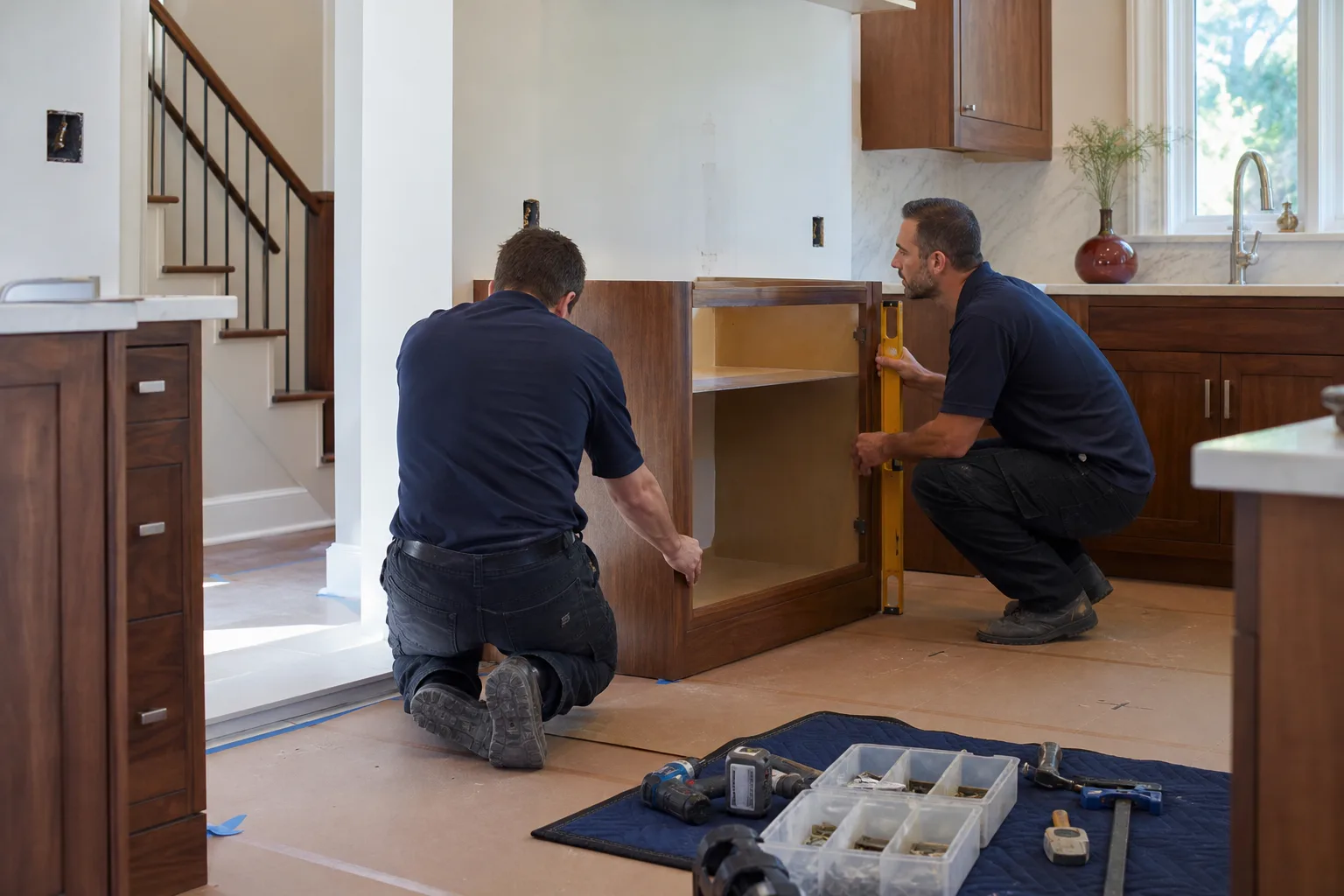
Nearly every failed joint can be repaired with the slab in place. The repair involves pulling the old caulk and backer rod, prepping the joint faces, installing a joint-sized backer, and then packing a movement-rated sealant into a primed, clean joint. The slab itself is non-porous and doesn’t rot, warp, or leak, so as long as the joint is sound, the Caesarstone is doing its job. Full slab removal is rare and only needed when the slab edge has chipped or cracked from structural movement underneath.
Most single-seam and even double-seam Caesarstone joint repairs happen in one visit that runs two to four hours, with the longest step being the prep and drying pass before the new sealant goes in. If drywall behind the slab has to come out, that adds a second visit for mudwork and paint. Either way, we schedule a fixed arrival window, not an all-day “we’ll get there when we get there.”
Yes. We carry the common Class 25 sealant cartridges, backer rod, joint tapes, and color-matched caulk families used with Caesarstone, Silestone, and Cambria surfaces. We also keep a small stock of roof transition flashing profiles, and the rest we pull from our usual Houston-area supply houses the same day. You won’t wait a week for a tube of sealant to ship across the country.
Written by Trevor Nash, Owner, Penhallow Remodeling Houston at Penhallow Remodeling Houston, serving Houston and nearby areas.
Need a Written Price Before You Start?
Trevor and his crew have seen enough Houston roof-to-counter leaks to know exactly where they start and what it takes to fix them for good. Give us the straight story on what you’re seeing, and we’ll give you the straight number on what it costs. Call (254) 527-5340 today to schedule your free estimate in Houston, and you’ll get a line-item price in writing before any work begins.


