

Free written scope consultation - allowances, timeline, and change-order rules on paper before a single trade is scheduled
Caesarstone Home Additions & ADU: The Houston Owner’s Guide
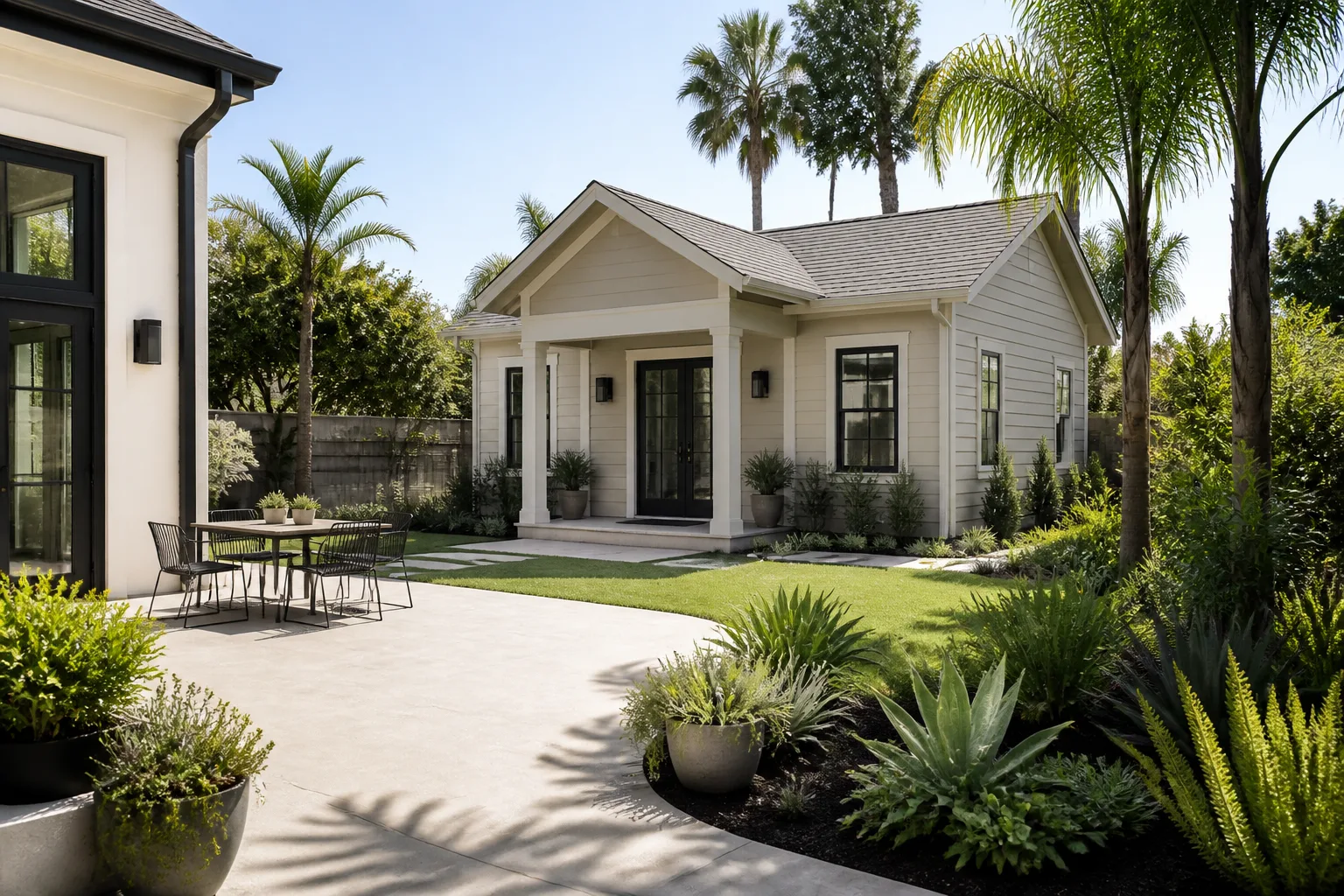
If you’re planning a home addition or ADU in Houston and want Caesarstone surfaces throughout, expect the full project to run $45,000 – $130,000 installed, depending on square footage, foundation work, and how much Caesarstone you’re incorporating. We install Caesarstone in new builds, garage conversions, and backyard ADUs across Houston, and we stock the quartz slabs and installation materials needed to keep the job moving without supply-chain stalls. Most Houston owners come to us after discovering their existing countertops or the surface materials they ordered won’t match the new addition’s footprint, or they’ve learned their current fabricator can’t handle the structural work a Houston ADU demands.
Key Takeaways
- Home additions in Houston run $45,000 – $130,000; ADUs run $90,000 – $220,000 depending on size, foundation type, and finish level.
- Caesarstone slabs are installed at the end of the project but must be spec’d at the start, because thickness and overhang details affect framing and cabinet design.
- Houston’s expansive clay soil means foundation engineering drives cost more than countertop selection does. We won’t let you skip it.
- We inspect, measure, and template every Caesarstone surface before ordering, so seams land where they should, not where they happen to fall.
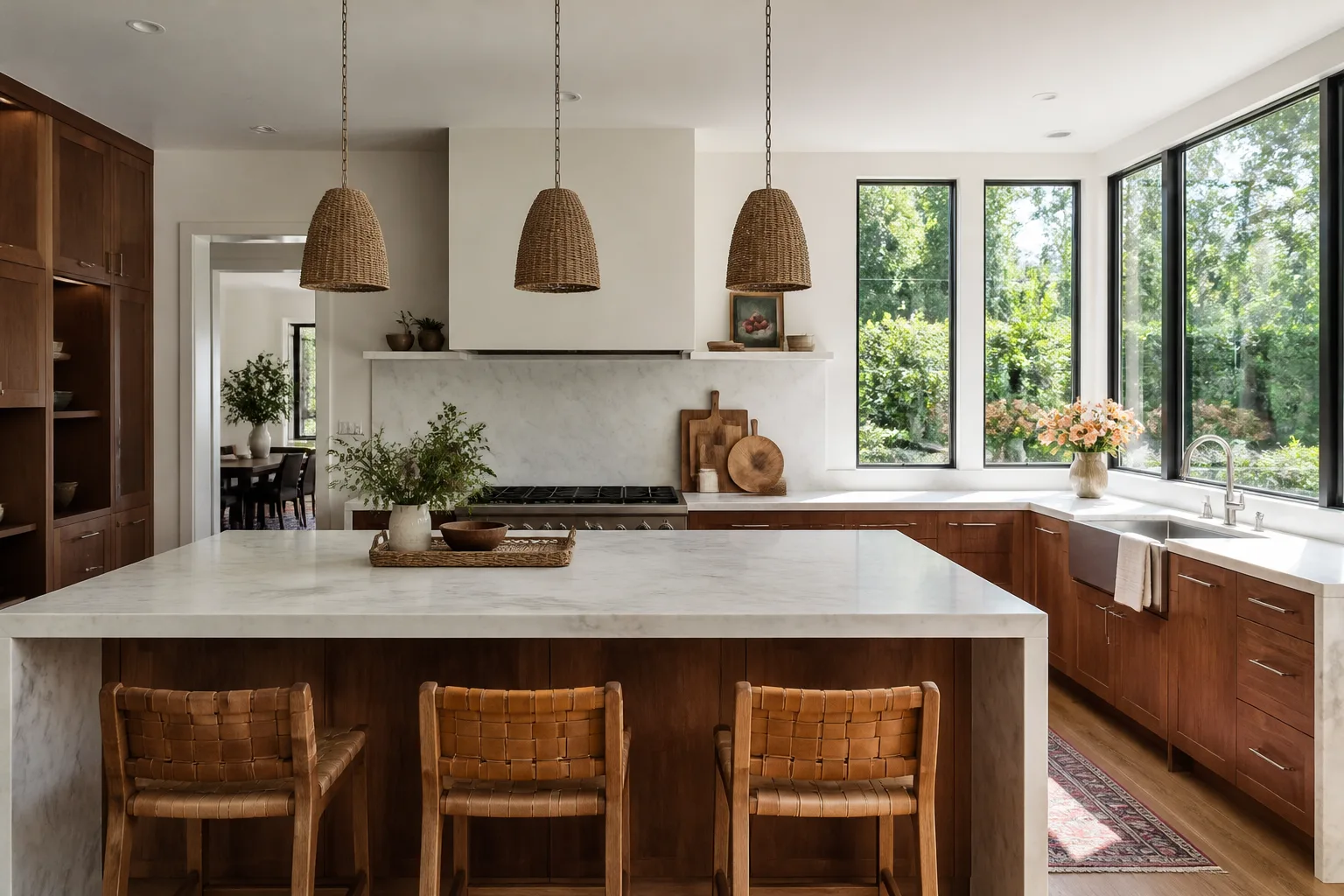
Here’s the reality: a Caesarstone addition isn’t a parts swap. It’s a full integration. The countertops, waterfall islands, and backsplashes have to be planned around the framing, the cabinets, and the way Houston’s humidity and soil movement affect a slab. Trevor Nash has seen too many additions where a beautiful Caesarstone top cracked within a year because the foundation underneath wasn’t right. That’s the conversation we have before we ever talk slab color.
Which Caesarstone Models This Applies To
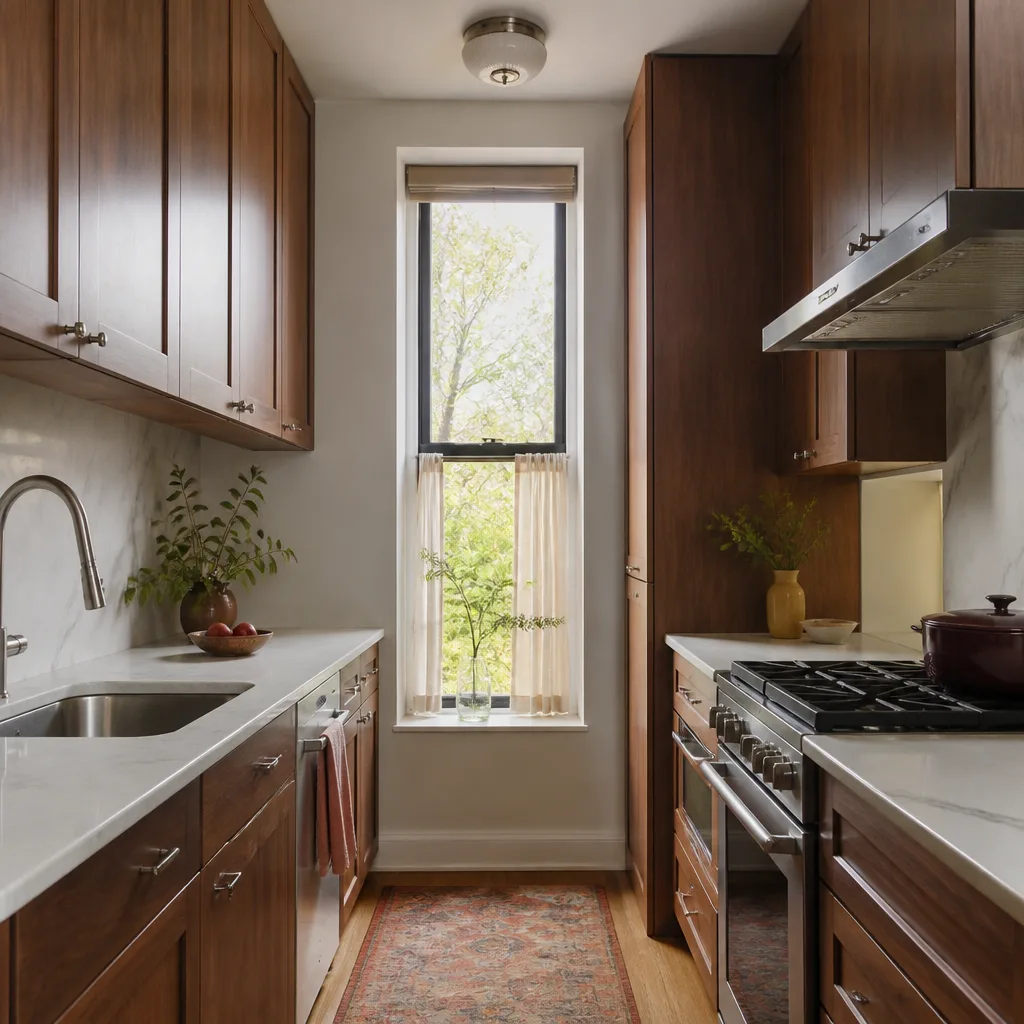
Caesarstone manufactures quartz surfaces in two standard thicknesses: 2 cm (roughly ¾ inch) and 3 cm (roughly 1¼ inch). For a Houston addition or ADU, we almost always spec 3 cm because it spans wider cabinet runs without additional plywood support and holds up better to the thermal swings between Houston’s humid summers and air-conditioned interiors. The 2 cm option works for vertical applications like backsplashes and shower walls, but on a kitchen island that sees daily use, 3 cm is the standard we recommend.
Identifying the exact Caesarstone you’re matching is simple if you know where to look. Every Caesarstone slab has a lot number printed on the back or side edge; that number ties it to a specific production run, which matters if you’re extending an existing countertop into a new addition. Quartz color shifts slightly between production runs, and a slab from a different lot can look noticeably different under Houston’s strong natural light. If you don’t have the lot number, take a photo of the surface in daylight and the closest full-slab supplier can usually narrow it to a handful of colors. We do this matching at no charge before quoting.
One thing Penhallow Remodeling is not: we are an independent Houston contractor, not a Caesarstone dealer or factory affiliate. That matters because we’re free to tell you when a different quartz brand makes more sense for your budget without a sales target pushing one slab over another. We do install Caesarstone regularly, and we also work with Cambria and Silestone when the spec calls for it. The decision should be about the surface and the warranty, not about what’s on a showroom floor this week.
Styles & brands we work with







Signs Your Caesarstone Home Additions & ADU Is Failing
- Cracks radiating from a corner of the island or a sink cutout. This usually means the cabinet framing shifted or the slab wasn’t supported evenly. In Houston, soil movement under a poorly engineered slab can cause this within the first two years.
- Seams that were tight but have now opened up or uneven edges where two slabs meet. Quartz doesn’t expand much, so a widening seam almost always points to movement in the structure below, not the Caesarstone itself.
- A hollow sound when you tap the surface. Caesarstone should sit fully bedded on its support. Voids mean the adhesive failed or the cabinets weren’t level from the start, and the slab is now carrying weight in places it wasn’t designed to.
- Chipping along the front edge in an addition that’s less than a year old. That points to the overhang being cut too aggressively for the support brackets installed, or the wrong thickness of material being used for the span.
- Discoloration or stubborn haze that won’t clean off. Quartz resists staining, but Houston’s hard water combined with the wrong cleaner can etch the surface over time. We see this most often when homeowners use abrasive powders or acidic sprays that the manufacturer specifically warns against.
Replacement Cost & What’s Included
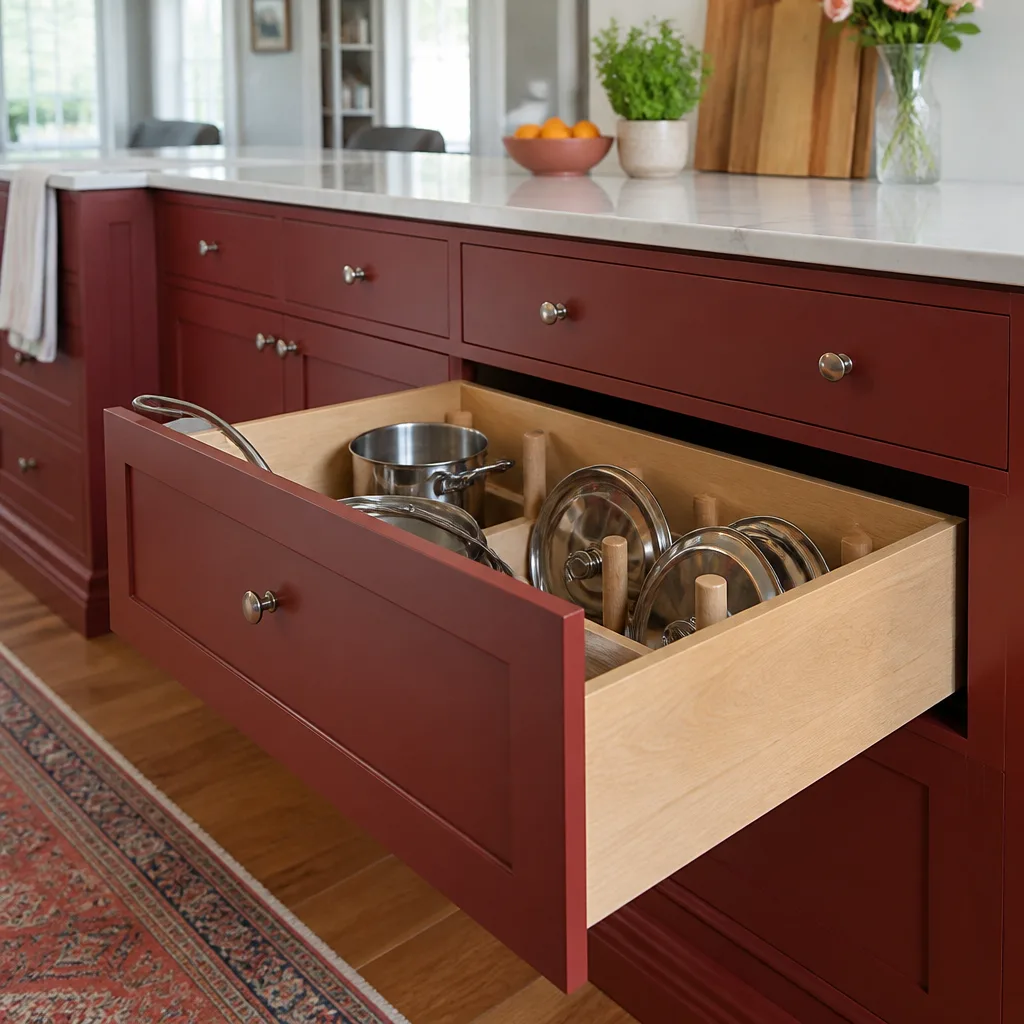
For a kitchen or bath addition in Houston, Caesarstone countertop installation typically runs $2,000 – $6,500 for the surface work alone, but the full home addition carrying that surface runs $45,000 – $130,000, and a standalone ADU runs $90,000 – $220,000. What drives that spread? Foundation type is the biggest line item. A pier-and-beam addition behaves differently than a slab-on-grade one, and in Houston’s clay-heavy soil, the wrong choice cracks quartz. Square footage, cabinet grade, and ceiling height all move the number too.
Every quote we write includes the Caesarstone slab, fabrication, templating, edge profile, delivery, installation, and seam work in one line-item price. If we spec a plywood substrate under a 2 cm top, that’s in the number. If we need to reinforce cabinets before the slab goes down, that’s also in the number. What you won’t see is a change order the week of install because “the countertop crew found something.” We find it during the estimate, not after demo.
The 365-Day Done Right Promise applies here. If a seam fails or a slab cracks due to our installation inside the guarantee window, we return and fix it at no charge. No re-inspection fee, no second visit charge. It’s written on every project we hand you.
See the difference
 Before
 After
After Before
 After
After Before
 After
AfterDIY or Call Us?
Countertop measurement and installation is not a weekend project, and Caesarstone slabs are heavy enough that a dropped piece can break a foot or take off a finger. There’s no safe DIY version of manhandling 3 cm quartz through a Houston garage conversion doorway. What you can do yourself: measure your existing countertop dimensions with a tape, take clear photos from three angles, and note the cabinet layout underneath. That gives us a solid starting point for a rough number before we ever step foot in your home.
Where DIY goes wrong is the templating. A countertop template isn’t a measurement, it’s a physical pattern of the exact cabinet footprint, and being off by an eighth of an inch means a slab that doesn’t seat against the wall. Then you’re paying for a second slab and waiting another three weeks. Call us at (254) 527-5340 instead. We template it right the first time, and if it’s wrong, that’s our problem to fix, not yours.
FAQs
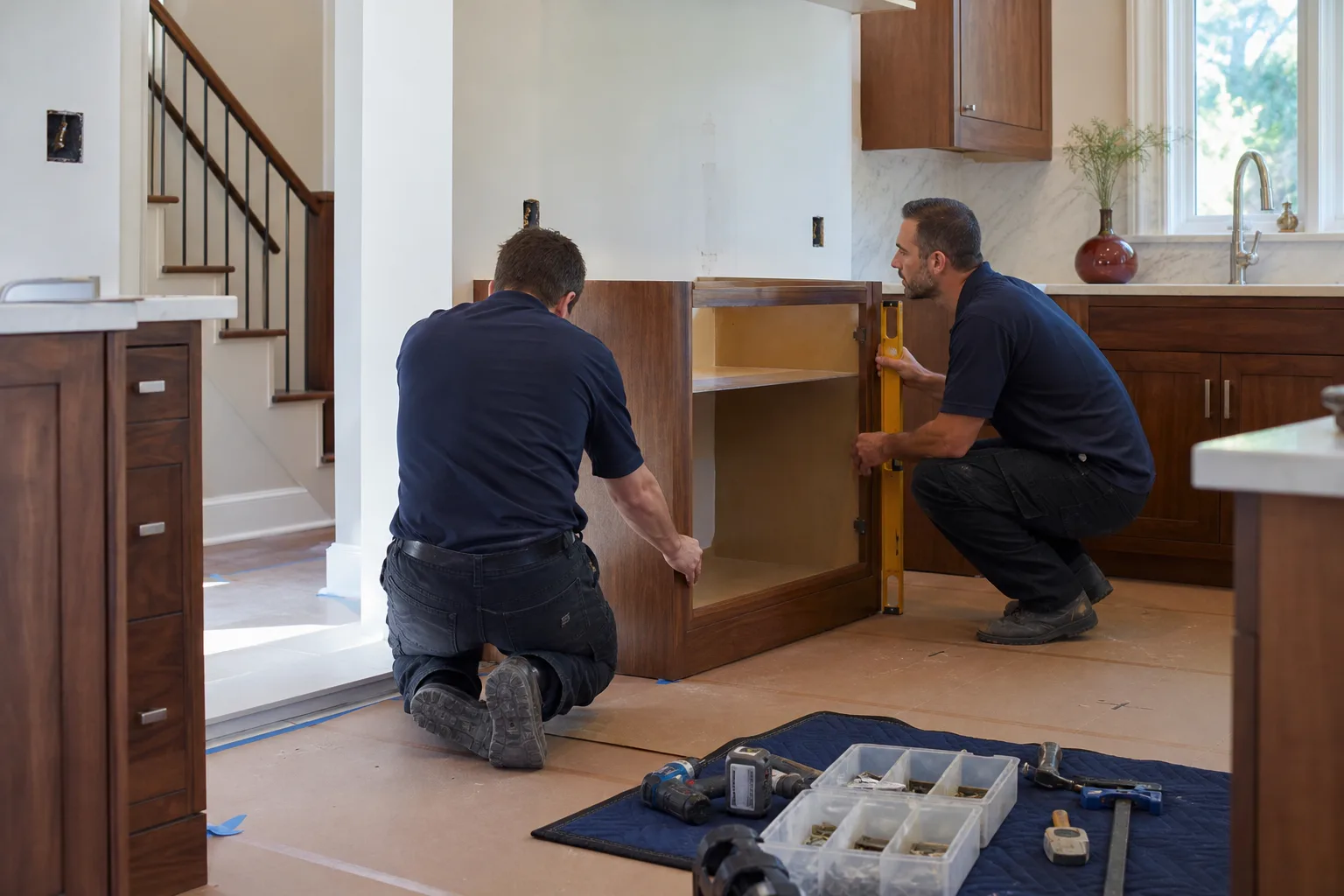
A properly installed Caesarstone slab in a Houston addition should last 20 to 30 years before showing meaningful wear, provided the foundation underneath is stable and the surface is cleaned with pH-neutral quartz cleaner. The quartz surface itself won’t fail; what fails is what’s under it. That’s why we spend as much time on the substrate and cabinet leveling as we do on the slab itself. If you’re planning an addition, call (254) 527-5340 and we’ll walk the site with you before any money changes hands.
Small chips and minor edge damage can often be filled and polished to near-invisible, but a structural crack through the slab usually means full replacement because quartz can’t be glued back to its original strength. The repair cost for chip fill is a few hundred dollars; replacement is the $2,000 – $6,500 range depending on square footage. We’ll give you an honest read on which one makes sense before we quote either path.
Once the cabinets are set and the template is cut, Caesarstone fabrication and install typically takes 2 to 3 weeks in Houston, with the actual on-site installation done in a single day. The longest wait is slab sourcing and fabrication, which we order the day the cabinets are confirmed level. We don’t order slab before that because a template taken on unlevel cabinets is a template you’ll pay for twice.
We work with Houston slab suppliers who stock the most popular Caesarstone colors locally, which usually means no more than a week to pull a slab, but uncommon colors or recent designer releases can take 3 to 4 weeks to arrive. We don’t warehouse slabs ourselves, because quartz is best stored flat in a climate-controlled yard, not a truck. When you call (254) 527-5340 for an estimate, we’ll check current slab availability for your color while you’re on the phone.
Get Your Houston Addition Priced Honestly
If you’re planning a home addition or ADU in Houston and want Caesarstone done right the first time, call Penhallow Remodeling Houston at (254) 527-5340. Trevor Nash will walk the site, explain what needs to happen in what order, and hand you a written price with the guarantee in it. That’s The Kingswell Way: say the price before the work, show up in the window we gave, leave the place cleaner than we found it. Give me the straight story on what you need, and I’ll give you the straight number on what it costs.
Written by Trevor Nash, Owner, Penhallow Remodeling Houston at Penhallow Remodeling Houston, serving Houston and nearby areas.


