
Free written scope consultation - allowances, timeline, and change-order rules on paper before a single trade is scheduled
Oldcastle Home Additions & ADU: The Houston Owner’s Guide
Oldcastle home additions and ADU projects in Houston typically run $45,000 to $130,000 for a complete build, depending on square footage, foundation type, and finish level. A full ADU construction starts around $90,000 and can reach $220,000 when you factor in kitchen and bath packages, separate utility connections, and Houston’s permitting requirements. Most homeowners call us after their existing addition has failed at a specific point: a cracked slab, a leaking tie-in where the new roofline meets the old, or settling that pulls the addition away from the main structure. You’ll feel that failure in a door that sticks, drywall cracks at the connection point, or water stains near the transition.
We’re an independent Houston remodeler, not affiliated with Oldcastle. What we know is how to repair and rebuild additions that hold up to Houston’s clay soil, our humidity swings, and the rain we get in spring and fall. If your addition is failing, call (254) 527-5340 for a written assessment and a real number before any work begins.
Which Oldcastle Models This Applies To
Oldcastle doesn’t manufacture home additions themselves. The name you’re likely seeing is on the concrete, masonry, or hardscape materials used in your addition: Oldcastle APG products like Belgard pavers, Sakrete concrete mixes, or precast blocks. So the “Oldcastle part” that fails is usually the foundation system, the CMU block wall, the paver base, or the concrete slab poured with Sakrete or a similar Oldcastle product. If you have paver patios or driveways that were part of the addition package, those Belgard or Unilock pavers carry their own specs for base depth and joint material.
Here’s the compatibility gotcha we see in Houston: a lot of additions were built with standard CMU block on a slab, and the slab was poured without enough rebar or with a vapor barrier that got skipped. Oldcastle precast products perform fine when installed to spec. The failure point is almost always the substrate, or what’s underneath. When we assess, we look at the base material, the grade, and whether the original contractor used the right Sakrete mix for a load-bearing application versus a decorative one.
OEM versus aftermarket matters less for Oldcastle materials than for the structural parts that connect them. If you need new CMU block or replacement pavers, we can source from Oldcastle’s current product lines. If the issue is a failed lintel, an undersized beam, or a rotted sill plate, we’re matching that to code, not to whatever brand the original builder grabbed. For pavers we install Belgard and Unilock, which are Oldcastle and Unilock brands respectively, and we also stock material compatible with KraftMaid cabinet lines and Cambria or Silestone countertops if your addition includes those finishes.
Styles & brands we work with







Signs Your Oldcastle Home Additions & ADU Is Failing
- Separation cracks at the tie-in. Where the addition’s framing or masonry meets the original house, you’ll see a vertical or diagonal crack that widens over time. This isn’t settling, it’s differential movement. The addition’s foundation and the main house’s foundation are moving at different rates, and the crack shows you exactly where the two structures are fighting each other.
- Doors that stick seasonally, then don’t close at all. Houston’s clay soil expands when wet and shrinks when dry. As the slab under your addition moves, door frames rack slightly. First it’s a door that rubs in summer. Eventually the frame is out of square enough that the door won’t latch, and that means the slab under the addition has moved beyond cosmetic settling.
- Water pooling or staining at the addition’s interior floor. If the slab wasn’t poured with proper grade drainage away from the structure, or if the vapor barrier failed, you’ll see water wicking up through the concrete, mildew along baseboards, or efflorescence (that white powdery residue) on the block or slab surface. In Houston’s humidity, this never dries out on its own.
- Pavers shifting or sinking at the addition’s entry or patio. An Oldcastle paver installation that’s heaving, separating, or pooling water means the base wasn’t compacted properly or the wrong base material was used. This often appears two to three years after placement, once Houston’s wet-dry cycles have had time to work on the base layer.
- Drywall or brick cracks radiating from windows and doors in the addition. These are load-transfer failures. The header over the window wasn’t sized right, or the masonry veneer wasn’t tied to the framing correctly. The crack pattern tells us where the load is concentrating, and if it’s active, the fix is structural, not cosmetic.
See the difference
 Before
 After
After Before
 After
After Before
 After
AfterReplacement Cost & What’s Included
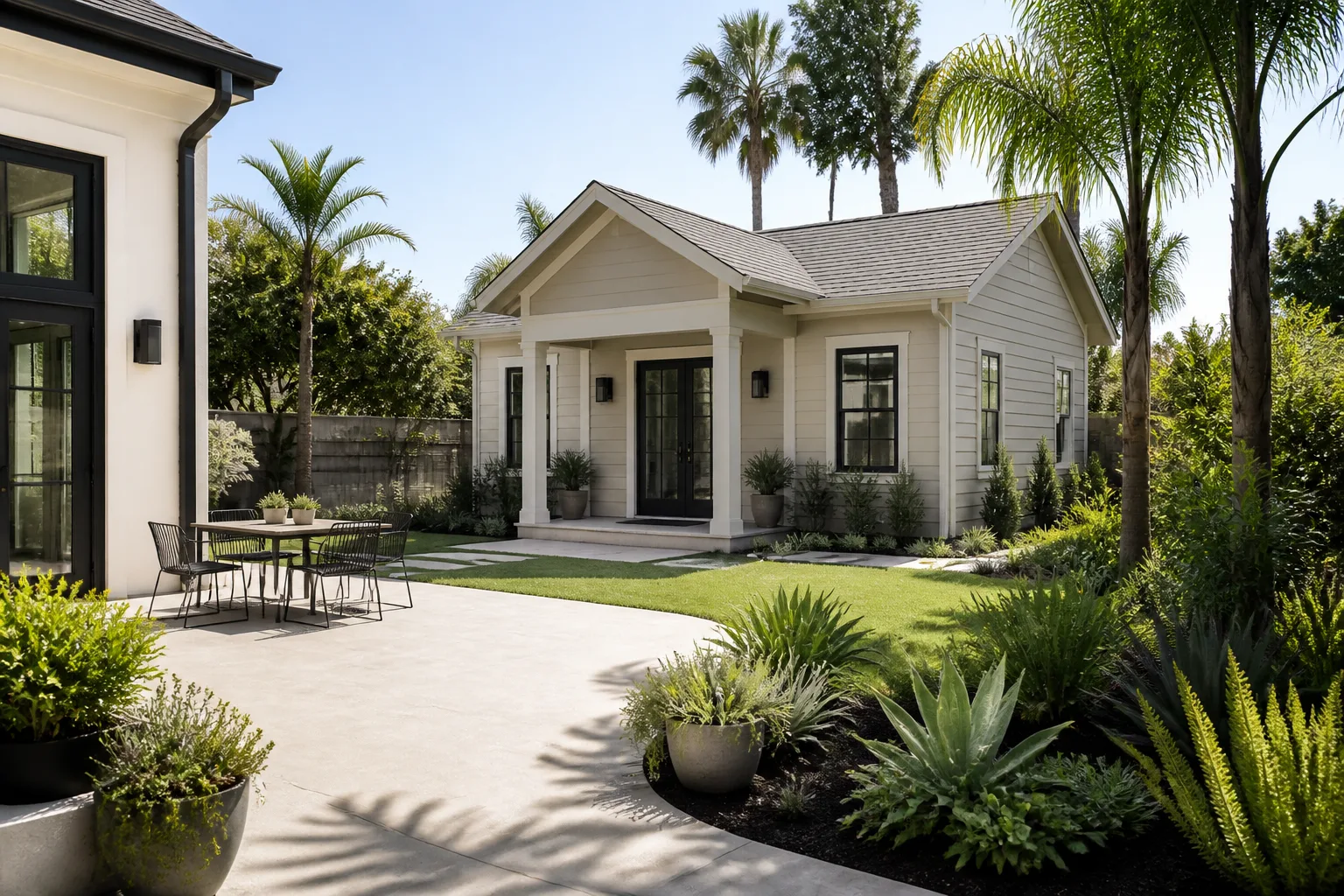
Repairing a failed addition in Houston falls into a few cost bands. A simple tie-in fix with crack injection, re-caulking, and repainting usually runs $400 to $1,800. Rebuilding a failed foundation section, underpinning, or stabilizing a slab can run $8,000 to $25,000. A full addition rebuild, tearing out the failed structure and building new, lands right back in the $45,000 to $130,000 range. The spread comes down to three things: how much foundation work is needed, whether the existing framing can be saved, and what level of finish you’re rebuilding to.
Every number we give you is a written price before any work starts. No ranges that widen after demo. No change orders because we “discovered” something we should have caught in the estimate. If the repair fails inside the 365 days covered by our Done Right Promise, we come back and fix it at no charge. That’s in writing on every project, along with the parts and labor breakdown.
DIY or Call Us?
If you have a cracked slab or a separating addition, there’s no safe DIY fix. You can’t re-level a foundation with a caulk gun, and any attempt to patch the visible crack without addressing the movement underneath just means you’ll be patching it again next season. This is one of those situations where the visible problem is the symptom, and the real work happens below grade, where you need to know what the soil near Meyerland does to a slab during a wet spring.
What you can safely do is document what you’re seeing: mark the crack with tape and date it, check it weekly, and note whether doors stick more after rain. That information helps us give a faster assessment. Then give me the straight story on what you need, and I’ll give you the straight number on what it costs. Call (254) 527-5340 and we’ll set a time to look at it. No charge for the conversation.
FAQs
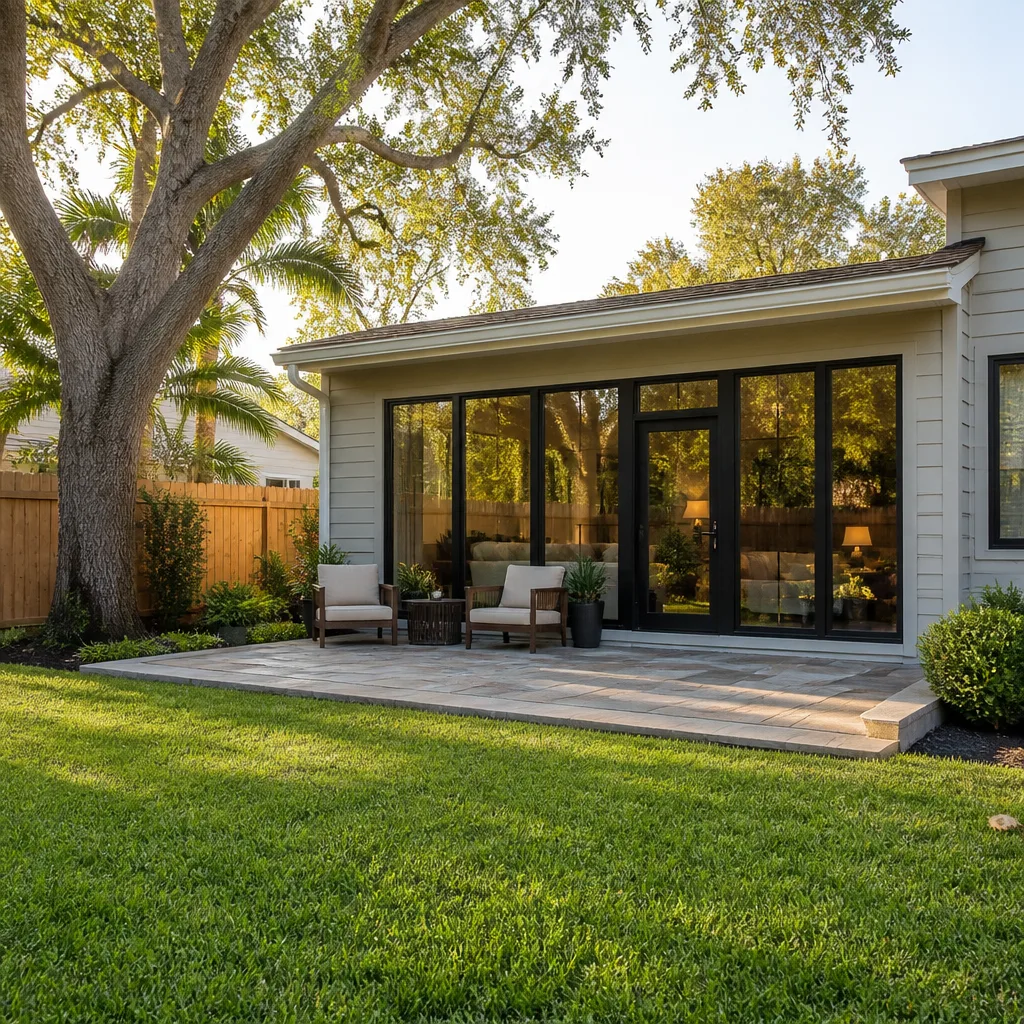
A properly built addition on a properly designed foundation should last 50 years or more, even in Houston’s clay soil. The finish surfaces (paint, caulk, pavers) have shorter lifespans, but the structure itself shouldn’t be failing in 5 or 10 years. If it is, something was skipped during the original build. Call (254) 527-5340 for an assessment and we’ll tell you exactly what’s failing and why.
Yes, in many cases. If the separation is caught early and the primary cause is soil movement or a failed tie-in detail, we can often stabilize the structure with underpinning, crack injection, and new tie-in hardware without tearing the whole addition down. The earlier we see it, the more options you have. Call us at (254) 527-5340 and we’ll tell you straight which path you’re on.
A tie-in repair usually takes one to three days. Foundation stabilization can take one to two weeks. A full addition rebuild typically runs two to six months depending on scope, finishes, and Houston’s permitting schedule. We give you a defined arrival window when we schedule, and we keep the job site clean at the end of every day.
For common Oldcastle products like CMU block, Sakrete mixes, and Belgard pavers, we can source materials quickly through our Houston suppliers, often within a few days. For older or discontinued Oldcastle product lines, we may need to match or substitute with an approved equivalent. We’ll tell you exactly what we’re using and why before any work starts, and the material brand will be itemized on your written estimate.
If your Oldcastle home addition or ADU in Houston is showing signs of failure, don’t wait for the next rain to make it worse. Call (254) 527-5340 to schedule a free estimate with Trevor Nash and the Penhallow Remodeling Houston team. We’ll assess it, price it in writing, and stand behind the repair with the 365-Day Done Right Promise.
Written by Trevor Nash, Owner, Penhallow Remodeling Houston at Penhallow Remodeling Houston, serving Houston and nearby areas.


