
Free written scope consultation - allowances, timeline, and change-order rules on paper before a single trade is scheduled
CertainTeed Home Additions & ADU: The Houston Owner’s Guide
CertainTeed siding, trim, and insulation products perform differently in a Houston addition or ADU than they do elsewhere, and when a section fails or an install goes wrong, you’ll want a crew that knows the difference. We install and repair CertainTeed-compatible exterior systems on home additions and ADUs throughout Houston, with full additions typically running $45,000 – $130,000 depending on square footage, foundation work, and exterior finish. Most owners call us after noticing water staining at a roofline intersection, siding that’s pulling loose at the corners, or insulation that never seemed to perform the way the spec sheet promised.
Here’s the thing about additions in Houston: the heat and humidity don’t forgive shortcuts. A wall that’s flashed wrong will show it within two seasons. If you’re seeing bubbling paint, soft spots near the bottom of your siding, or a utility bill that climbed after the addition was built, the exterior envelope is usually where the problem starts. We’re an independent contractor, not a CertainTeed dealer or affiliate, but we’ve been matching their products to Houston conditions long enough to know exactly where they hold up and where they don’t.
Key takeaways:
- Full addition pricing in Houston: $45,000 – $130,000; ADU construction runs $90,000 – $220,000.
- CertainTeed fiber cement and vinyl lines handle Gulf Coast humidity well, but only if flashed and ventilated correctly.
- We inspect first, give you a written number, and never start work without one.
- Every job carries the 365-Day Done Right Promise in writing.
Which CertainTeed Models This Applies To
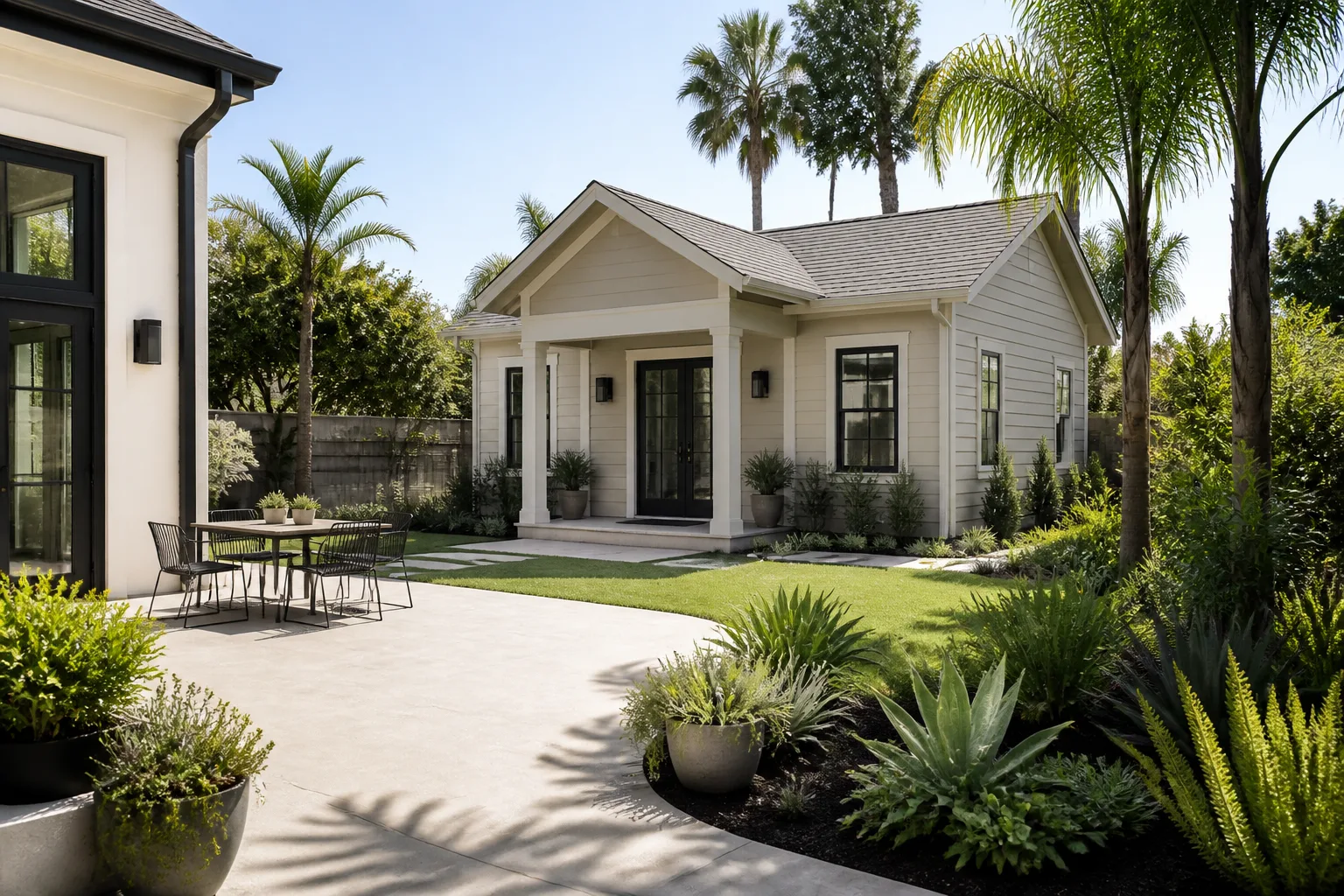
We work with the CertainTeed product families most commonly specified on Houston additions and ADUs: WeatherBoards fiber cement siding, Monogram and Cedar Impressions vinyl siding, CertaWrap weather-resistive barrier, and CertainTeed insulation batts and rigid foam. The compatibility question usually comes down to the substrate and the exposure rating. In Houston’s wind-driven rain, we recommend a 6-inch exposure or less on fiber cement lap siding against a properly taped sheathing plane, and we never install vinyl over uninsulated stud cavities without a drainage plane behind it.
How to identify what you have: look for the CertainTeed product code printed on the back of a siding plank or on the edge of a rigid foam board. Fiber cement pieces will have a mill date and plant code stamped near the nail line. Vinyl profiles have a profile code embossed on the lock leg. If you can’t find a code, measure the exposure and the butt height against a sizing chart, because CertainTeed lap profiles aren’t interchangeable with off-brand equivalents and the nail hem thickness matters for wind resistance. For CertaWrap on an addition, the roll label is usually still visible in the attic or at the base of a wall if the installer left the band intact. When original product is discontinued, we’ll always tell you before recommending an aftermarket substitute that changes the wall profile or warranty picture.
Styles & brands we work with







Signs Your CertainTeed Home Additions & ADU Is Failing
- Wavy or buckling siding at the roofline. This usually means the piece was nailed too tight and the Houston heat has since done its worst. CertainTeed fiber cement expands marginally in our humidity cycle, and a plank with no room to move will buckle at the fasteners or crack at the corners.
- Soft spots or bubbling paint near the bottom of a wall. In Meyerland and similar areas with high water tables, splash-back from heavy rain wicks up behind siding if the starter strip wasn’t raised off grade. That rots the sheathing behind your CertainTeed product, not the siding itself.
- Air movement or dust at baseboard level after a wind storm. A missed seam in the CertaWrap behind the siding lets the building envelope “breathe” in all the wrong places. You’ll feel drafts at the floor and see dust streaks on the drywall.
- Utility bills that never settled after the addition was built. When certain insulation batts are compressed into a cavity that’s too shallow, or faced the wrong way, the R-value drops well below the label. Houston attics hit 140°F in August, and a poorly insulated addition will tax the AC all summer.
- Condensation on interior walls or windows that face the addition. This points to a vapor barrier installed on the wrong side of the assembly, which is a fast track to mold inside the wall cavity. It’s one of the most common install errors we correct.
See the difference
 Before
 After
After Before
 After
After Before
 After
AfterReplacement Cost & What’s Included
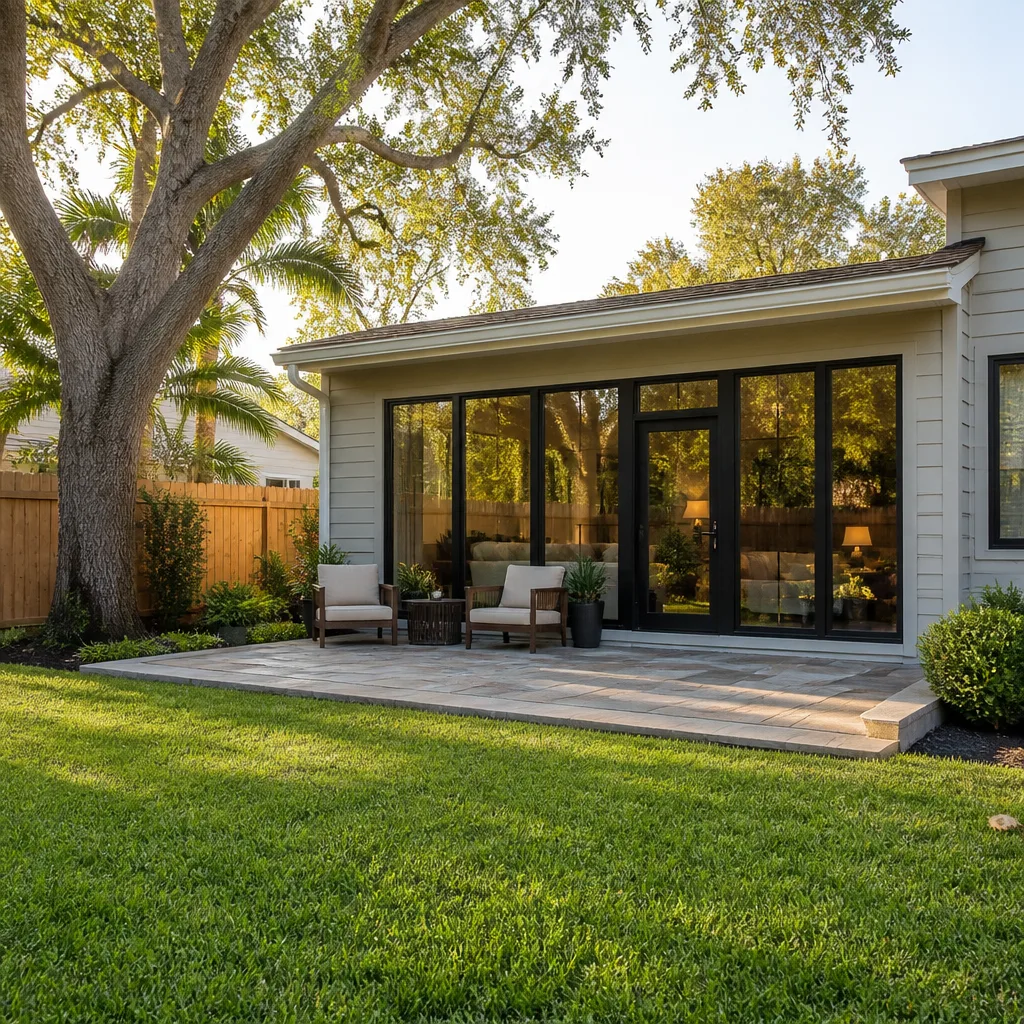
For a full home addition in Houston, we tell homeowners to plan on $45,000 – $130,000. A detached ADU runs higher, $90,000 – $220,000, because you’re adding a foundation, separate utility runs, and a second kitchen or bath. That range isn’t vagueness. It’s the difference between a 400-square-foot bedroom bump-out with a slab-on-grade foundation and a 900-square-foot primary suite over a pier-and-beam crawlspace with all the tie-in work that comes with it.
What drives the number: foundation type and soil condition (Meyerland’s gumbo clay moves more than north Houston’s sandy loam, and piers cost real money), the exterior system you’re matching, roofline complexity, and the finish level inside. Every bid we write includes the line-item breakdown: demolition, foundation, framing, exterior envelope including CertainTeed materials, electrical, HVAC, drywall, trim, paint, and flooring. We never hand over a single “addition: $110,000” number with no explanation. You’ll see exactly where each dollar goes before you sign anything, and the price on day one is the price on the final invoice. The work carries our 365-Day Done Right Promise in writing, and if a repair fails during that window, the second visit is on us at no charge.
DIY or Call Us?
You can safely handle the inspection side of this: walk the perimeter after a rain, check for standing water at the foundation line, look for gaps at trim intersections, and feel for soft spots on the siding. Those tell you what to tell us. What we don’t recommend is pulling off siding or opening a wall yourself. Houston’s humid climate means a small opening left uncovered over a weekend becomes a mold colony, and a wall cavity that’s opened wrong can compromise the entire envelope. More importantly, if structural framing, gas lines, or electrical are involved, it’s not a DIY job, it’s a code-inspection job.
Give me the straight story on what you need, and I’ll give you the straight number on what it costs. We come out, look at the addition or ADU, and put the scope and price on paper. Call (254) 527-5340 to schedule your free inspection and written estimate. A live person answers, day or night.
FAQs
A properly installed addition with CertainTeed exterior products should give you 30 to 40 years on the siding and 20-plus on the building envelope before major work is needed. Houston’s UV load and humidity shorten that timeline if the flashing or drainage plane was installed incorrectly. We’re often called in around year six or seven on bad installs, and the failures are almost always at transitions: roof-to-wall intersections, corners, and bottom edges.
If you’re unsure whether what you’re seeing is normal aging or an install problem, call us at (254) 527-5340 for an honest look. No charge for the opinion.
Yes, and most of the time that’s exactly what we recommend. If the structure and sheathing are sound, we can pull the failing section of CertainTeed siding, correct the flashing or drainage detail, and reinstall. Replacement only becomes necessary when water has rotted the sheathing or the framing, and even then the work is scoped to the affected area, not the whole addition.
We always quote the repair price first, and we’ll tell you if replacement is the only honest option. Call (254) 527-5340 to have us assess it.
Small to mid-sized siding repairs, flashing corrections, and insulation fixes take one to three days depending on how much of the wall needs to come apart. A full exterior re-skin on a large addition runs one to two weeks. We give you a written arrival window before work starts and the same background-checked, uniformed crew shows up every day until it’s done.
Schedule a walkthrough and get a written timeline by calling (254) 527-5340. No change orders, no mystery delays.
We keep the most common CertainTeed WeatherBoards profiles, CertaWrap, and insulation in regular stock for repairs and punch-list work, and we can source anything else from Houston suppliers within a day or two. For specific color batches or discontinued profiles, we’ll tell you upfront what’s available and what the lead time looks like before we write the proposal.
Tell us what you have and we’ll match it. Call (254) 527-5340 for a free written quote.
Written by Trevor Nash, Owner, Penhallow Remodeling Houston at Penhallow Remodeling Houston, serving Houston and nearby areas.


