


Free written scope consultation - allowances, timeline, and change-order rules on paper before a single trade is scheduled
ES Windows Home Additions & ADU: The Houston Owner’s Guide
ES Windows home additions and ADUs in Houston typically run $45,000 – $130,000 when built as a full project, with most failing parts during construction or after completion traced to three things: window flashing done wrong, foundation settlement from Houston’s clay soil, or seal failure on older ES Windows units that were never re-flashed after the addition tied into the main house. We stock and install ES Windows-compatible hardware, flashing kits, and replacement glazing for additions and ADUs across Houston, and we can usually diagnose a failing window or door component the same day we see it.
What we see most often in Houston is this: the ES Windows product itself is fine, but the integration between the new addition and the original structure was never detailed properly. Water finds the seam, the sill pan was skipped or taped wrong, and a year later you’ve got soft drywall under a window that cost real money. That’s the call we get. The fix is rarely the glass. It’s almost always the installation envelope around it. Trevor Nash has walked enough of these in Houston to know the failure pattern before he even opens the wall.
- Installed cost for a full ES Windows home addition or ADU scope in Houston: $45,000 – $130,000, depending on square footage, foundation type, and how many existing openings need to be tied in.
- Most “ES Windows failure” calls in Houston are actually flashing, sill pan, or settlement problems, not glass defects.
- We stock ES Windows-compatible sill pans, flashing tape, setting blocks, and replacement glazing on our trucks for Houston job sites.
- Penhallow Remodeling Houston is an independent contractor. We’re not affiliated with ES Windows. That means we’ll tell you honestly whether the window needs replacing or just re-flashing, because we don’t have a manufacturer rep’s quota to hit.
Which ES Windows Models This Applies To
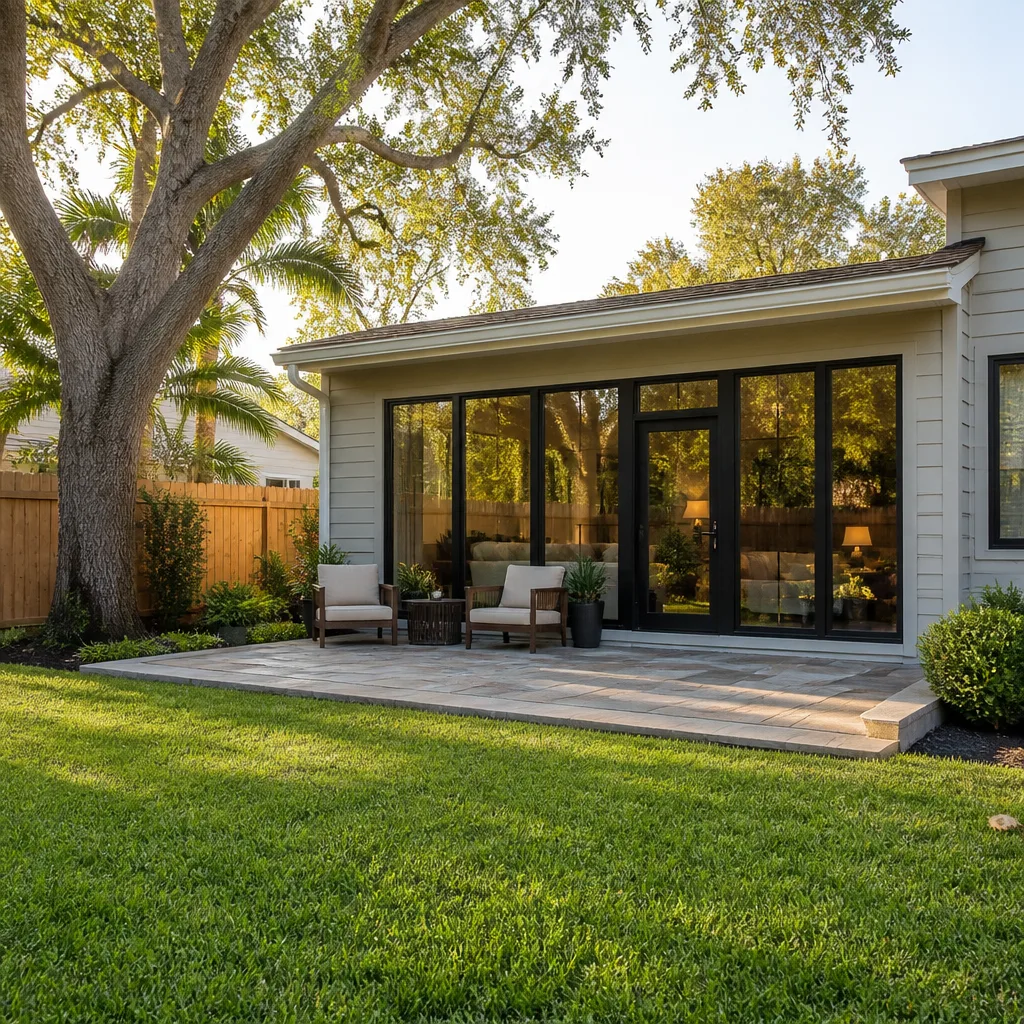
ES Windows builds several product lines, and the compatibility question is different for each. Their fixed picture windows, casements, awnings, and sliders all use different glazing channels and different weep systems. A slider’s sill pan is not interchangeable with a casement’s. If you’re matching a piece of hardware from an original ES Windows unit installed before the addition, the first step is reading the label. ES Windows etches the model number and glass specs into the corner of the glass itself, usually on the bottom-right pane when you’re standing inside looking out. If the etch has worn off, the frame extrusion profile will tell us which series it is.
The biggest compatibility gotcha in Houston is climate grade. ES Windows makes both standard and thermally improved units. A standard unit used in an unconditioned sunroom will not perform the same when that sunroom becomes a conditioned ADU with a mini-split running in August. The condensation point moves, and suddenly you’ve got water collecting in the interior track. That’s not a defect. It’s the wrong glazing package for the new use. When we build an ADU in Houston, we spec the right ES Windows thermal unit from the start. When we tie into an existing addition, we check what’s actually installed before promising anything.
OEM versus aftermarket: for sealed glazing units, we strongly prefer OEM ES Windows glass. The spacer chemistry and argon fill are matched to the actual extrusion. For hardware like locks, rollers, and keepers, quality aftermarket equivalents exist and can save real money without hurting function, but only on certain series. We’ll tell you which side of that line your window falls on. That’s a conversation we’ve had in Meyerland, in Kingwood, in Cypress, and in Sugar Land often enough that we don’t need the window in front of us to start narrowing it down, though we always confirm before ordering.
Styles & brands we work with







Signs Your ES Windows Home Additions & ADU Is Failing
- Water staining at the interior sill corners after a hard Houston rain. This is usually a weep hole blocked by construction debris or a sill pan that was never sloped toward the exterior. ES Windows are designed to drain water that gets past the outer seal, but only if the weeps are open and the pan is pitched correctly. We see this constantly on additions where the siding crew shot stucco or fiber cement directly over the weep line.
- Fogging between the glass panes. The desiccant in the spacer has saturated and the hermetically sealed airspace has failed. In Houston’s humidity, this happens faster than manufacturers’ typical 10-to-20-year lifespan predictions. A fogged unit means the insulating gas is gone and the seal is permanently breached. It cannot be repaired in place; the glazing unit has to be replaced.
- Sash drags or sticks when you operate it. On Houston clay soil, the addition’s foundation moves seasonally. ES Windows frames are aluminum, which is rigid. If the rough opening settles unevenly, the frame twists just enough that the sash binds. The window isn’t bad; the structure around it moved. Forcing the sash can snap the operator hardware, which turns a foundation check into a window replacement too.
- Visible gaps or daylight around the frame perimeter. The original caulking and backer rod has failed, or was never installed correctly when the addition was framed. On new Houston ADUs, this shows up within two or three years if the rough opening was oversized and someone filled the gap with expanding foam only. Foam is insulation, not an air or water barrier.
- You hear street noise louder in the addition than in the main house. That’s a sign the window was installed without proper perimeter sealing or that non-thermally-broken units were used for a living space. Houston’s road noise on 610, 290, and the Beltway is relentless. A properly sealed ES Windows unit cuts that down noticeably. If the addition sounds like a tent, something in the installation envelope failed.
Replacement Cost & What’s Included
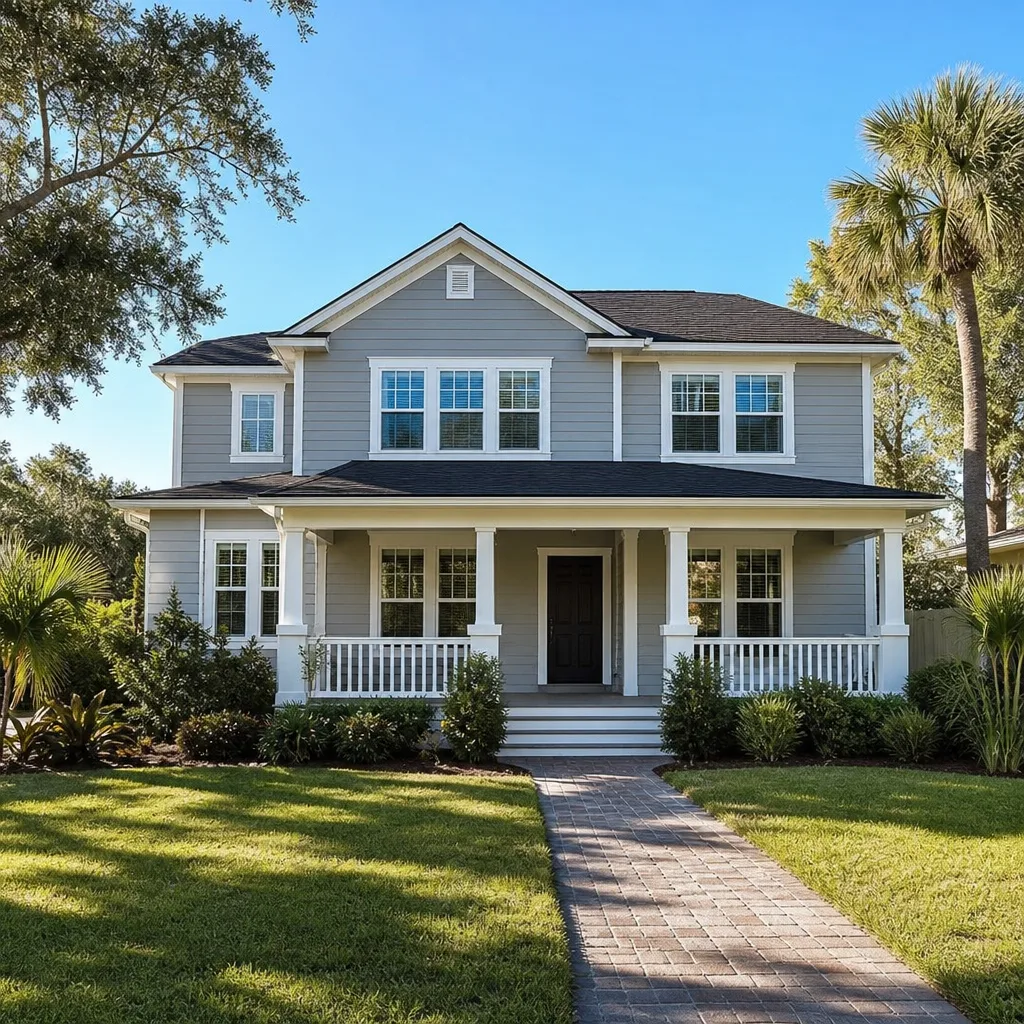
A complete ES Windows home addition or ADU in Houston runs $45,000 – $130,000 depending on the square footage, the number of existing openings you’re tying into, foundation type, and how much of the original siding or brick has to be cut back for the tie-in. The window and door package itself is a meaningful part of that number. On an ADU with eight to twelve openings, the ES Windows thermal package with proper flashing, sill pans, and integrated J-channel can run $18,000 – $40,000 of the total depending on sizes and series.
What’s included in our written price: every window unit, all flashing, sill pans and rough-opening sealing, the interior and exterior trim, debris hauling, and the 365-Day Done Right Promise that covers the work in writing. If a window leaks or a sash binds during that first year because of something we did, we come back and fix it at no charge. You get that promise on paper before we start, and you get the brand names behind it. We install ES Windows glazing and hardware to spec, with materials sourced from companies like KraftMaid, Cambria, and Silestone where the scope calls for them.
What drives the cost up: multiple second-story tie-ins, brick veneer that has to be toothed out and re-laid, poor existing flashing conditions that have already rotted wall framing, and permitting corrections on unpermitted prior work. What drives it down: simple rectangular additions, crawlspace or slab access with clear layout, and project phasing where we can reuse existing rough openings without re-framing the wall.
See the difference
 Before
 After
After Before
 After
After Before
 After
AfterDIY or Call Us?
Honest answer: you can clean the tracks, clear the weep holes with a pipe cleaner, and check that the sill pan still slopes outward. You can also re-caulk the exterior perimeter with a quality sealant if the old bead is cracked, though if the rough opening itself is leaking, caulk on the face is a band-aid. What you shouldn’t do is try to replace an ES Windows glazing unit or re-flash a rough opening by yourself. Getting the setting blocks, perimeter seal, and drainage plane right on a Houston addition requires pulling siding or cutting out stucco and rebuilding the water barrier in the right order. Get that sequence wrong and you’ll have the same leak back by next spring.
If your ES Windows failure is on a second-story addition or anywhere near the roofline, don’t get on a ladder with a glazing unit. The units are heavy, the angles are awkward, and one slip turns a $600 repair into a hospital visit and a broken replacement anyway. Call us at (254) 527-5340. We’ll come out, diagnose it in plain language, and put the number in writing before anything gets touched. That’s how we do every job in Houston.
FAQs
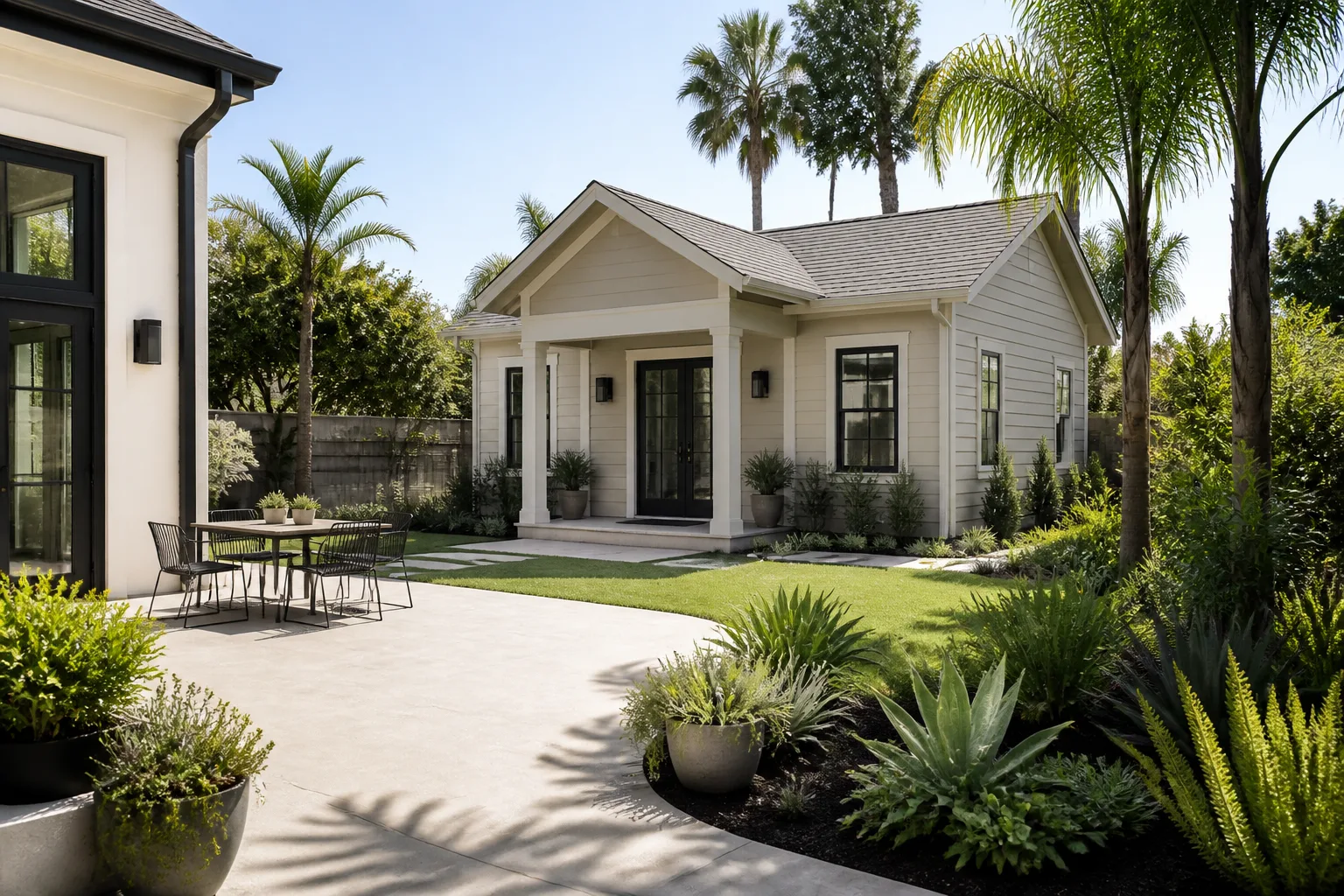
Properly installed ES Windows should last 25 to 40 years in Houston’s climate, with the glazing seals typically intact for 10 to 20 of those years. Houston’s heat and humidity shorten the seal lifespan compared to drier climates, so fogging between panes tends to appear earlier here than the manufacturer’s best-case ratings. If your addition’s windows are showing seal failure at year eight, the original installation detail usually deserves as much scrutiny as the window itself. Call (254) 527-5340 and we’ll tell you what you’re actually looking at before you spend a dime.
It depends on what failed. A broken latch, a worn roller, or a torn weather strip can usually be repaired. A fogged glazing unit with a breached seal cannot be repaired in place; the glass pack has to be replaced. A window that leaks from the rough opening doesn’t need a new window at all; it needs the flashing and sill pan corrected. That third scenario is the one we see most in Houston, and fixing it usually costs a fraction of a replacement window.
Most repairs take half a day to a full day per opening, on site. Replacing a glazing unit is typically done in under two hours from start to finish. Re-flashing a window that’s been leaking for a while takes longer because we have to open the wall, inspect for rot, repair any damaged framing, and then rebuild everything in the correct order. We’ll give you a written time frame and price before we start, and we hold to both.
Our trucks in Houston carry ES Windows-compatible sill pans, flashing tape, setting blocks, weeps, and common glazing sizes for the series we service most. Specialty sizes and thermally-broken units are ordered to spec, and most arrive within one to two weeks depending on the series and custom glass options. If you need the exact part matched before we arrive, call (254) 527-5340 with your model number and we’ll check our shop inventory and the supplier lead time while you’re on the phone.
No. The written price we give you at the outset is the price on the invoice, period. The only time a number changes is if you change the scope, or if we open a wall and find structural damage that no one could have seen from the outside. In that case we stop work, show you what we found, and re-write the number before we touch another stud. Give me the straight story on what you need, and I’ll give you the straight number on what it costs.
Call Penhallow Remodeling Houston
If you’ve got a failed ES Windows home additions & ADU issue in Houston, don’t guess at it. Call (254) 527-5340 and schedule your free estimate. A real person answers the phone any time, day or night, and a background-checked, uniformed technician will show up with a written price and a written guarantee before any work starts. Penhallow Remodeling Houston is part of the Kingswell family of companies, operating to the Kingswell Way since 2004: say the price before the work, show up in the window we gave, and leave the place cleaner than we found it.
Written by Trevor Nash, Owner, Penhallow Remodeling Houston at Penhallow Remodeling Houston, serving Houston and nearby areas.


