
Free written scope consultation - allowances, timeline, and change-order rules on paper before a single trade is scheduled
Sakrete Kitchen Remodeling: The Houston Owner’s Guide
If you’re searching for Sakrete kitchen remodeling in Houston, here’s the straight answer: Sakrete makes concrete and mortar products used inside a kitchen remodel – floor leveler, cement board, tile mortar, grout, and concrete countertop mixes – not the cabinets or fixtures themselves. A full kitchen remodel in Houston typically runs $14,000 to $45,000 installed, depending on layout, cabinet line, and countertop material. What usually brings a homeowner to this page is a specific failure: cracked tile from a floor that was never leveled, grout crumbling out of a backsplash, or a concrete countertop that’s chipping at the edge two years after the DIY pour.
Most of the Sakrete-related callbacks we see in Houston fall into three buckets: the substrate wasn’t prepared right, the wrong product was used for the humidity, or the mixing ratio was off. We stock Sakrete floor leveler, cement board, polymer-modified thin-set, and sanded grout on our trucks, and we match the right product to the failure before we quote a number. Trevor Nash has walked enough Meyerland-area kitchens to know what Houston’s clay soil and summer humidity do to a slab over twenty years – and why that matters before a single tile gets set.
Which Sakrete Products This Applies To
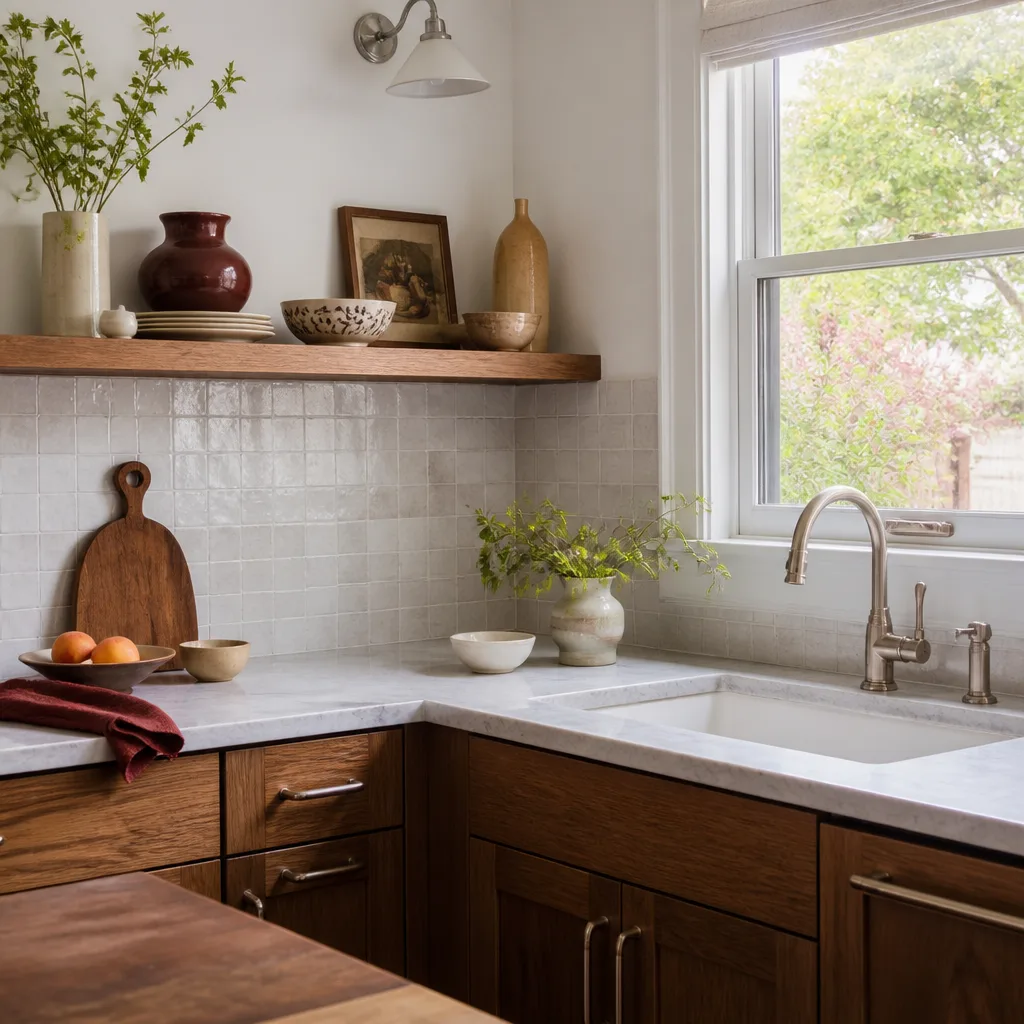
Sakrete’s kitchen-relevant line breaks down into four families, and each one has a specific job. Self-leveling underlayment (like Sakrete’s Self-Leveling Underlayment or Level-Max) is what you pour over a wavy slab before tile goes down. Cement board (the moisture-resistant panel behind wall tile) is what should sit behind a backsplash in a Houston kitchen where a dishwasher steams against the wall every cycle. Polymer-modified thin-set mortar bonds tile to that board or slab – the “polymer” is what gives it flex, and flex is exactly what tile needs in a house that shifts with wet-dry soil cycles. Sanded grout fills joints a quarter-inch or wider in floor tile and backsplash work.
Here’s the compatibility gotcha most Houston owners miss: not every Sakrete product is rated for every application. Some of their mortar mixes are spec’d for flooring only, not wall tile. Some underlayment products call for a minimum thickness that a short pour won’t meet. Before you buy a bag, check the label on the back – the coverage chart and the substrate limitations are printed there. If you’re matching an existing product, keep the empty bag or snap a photo of the front panel; the product code tells us exactly what was used, and that tells us why it failed. On the OEM-versus-aftermarket question: for structural products like floor leveler, we use Sakrete itself. For grout, there are quality equivalents that match sheen and wear, but we default to the name brand unless the color chart calls for something specific.
Styles & brands we work with







Signs Your Sakrete Kitchen Remodeling Is Failing
- Cracked floor tile in a straight line across the kitchen. This usually means the slab wasn’t leveled before tile went down, or a crack-isolation membrane was skipped. The tile is the symptom; the slab or the prep is the cause.
- Grout crumbling out of the backsplash joints or the floor seams. In Houston, this is often a sign the wrong grout was used – unsanded grout in a joint that moves, or a cheap mix that never cured fully in high humidity. Vacuum it out, don’t just paint over it.
- Hollow-sounding tile when you tap it with a screwdriver handle. That’s the tell of thin-set that failed to bond – usually from a bad mix, a dusty substrate, or mortar that skinned over before the tile was set. The tile hasn’t fallen yet, but it will.
- Concrete countertop chipping or staining along the cooking zone. Some Sakrete countertop mixes need a sealer, and in a Houston kitchen where oil and citrus splash daily, an unsealed pour absorbs both. The edge chips come from a form that wasn’t vibrated, leaving air pockets near the surface.
- Cabinet doors sticking or counters pulling from the wall. This one isn’t Sakrete specifically – it’s Houston soil movement working on the whole room. But the fix starts with understanding the slab, and that’s where honest leveling data comes in before you remodel.
See the difference
 Before
 After
After Before
 After
After Before
 After
AfterReplacement Cost & What’s Included
In Houston, the price for Sakrete-related kitchen work lands inside the broader remodel range you saw above, but here’s how the specific line items break down:
- Full kitchen remodel with Sakrete substrate prep: $14,000 – $45,000
- Small kitchen refresh (backsplash, countertop, floor leveling): $9,000 – $20,000
- Floor leveling and tile replacement (200 – 300 sq ft): $2,000 – $6,500
- Backsplash replacement, including new cement board and mortar: $800 – $2,500
- Countertop installation (Cambria, Silestone, or concrete pour): $2,000 – $6,500
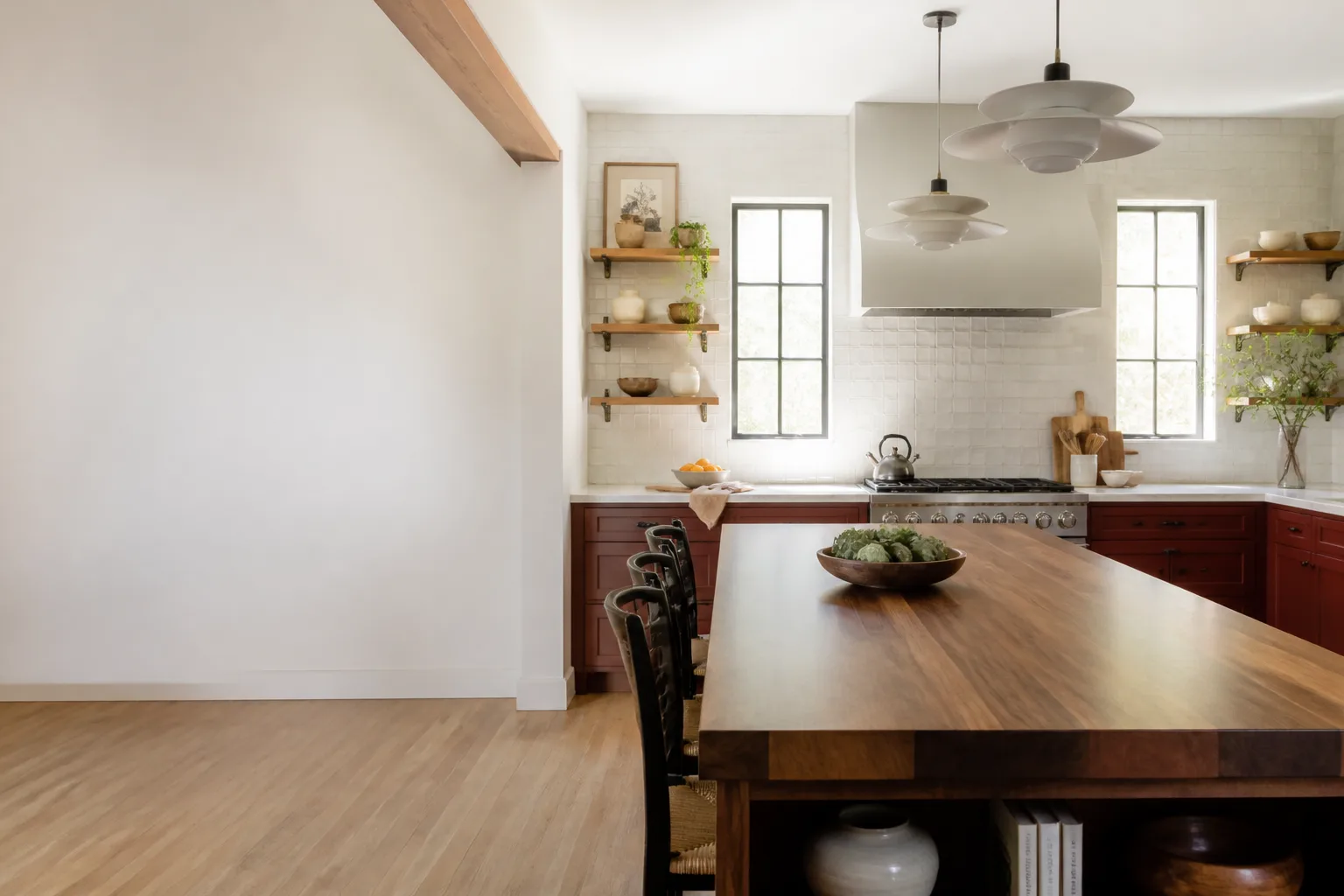
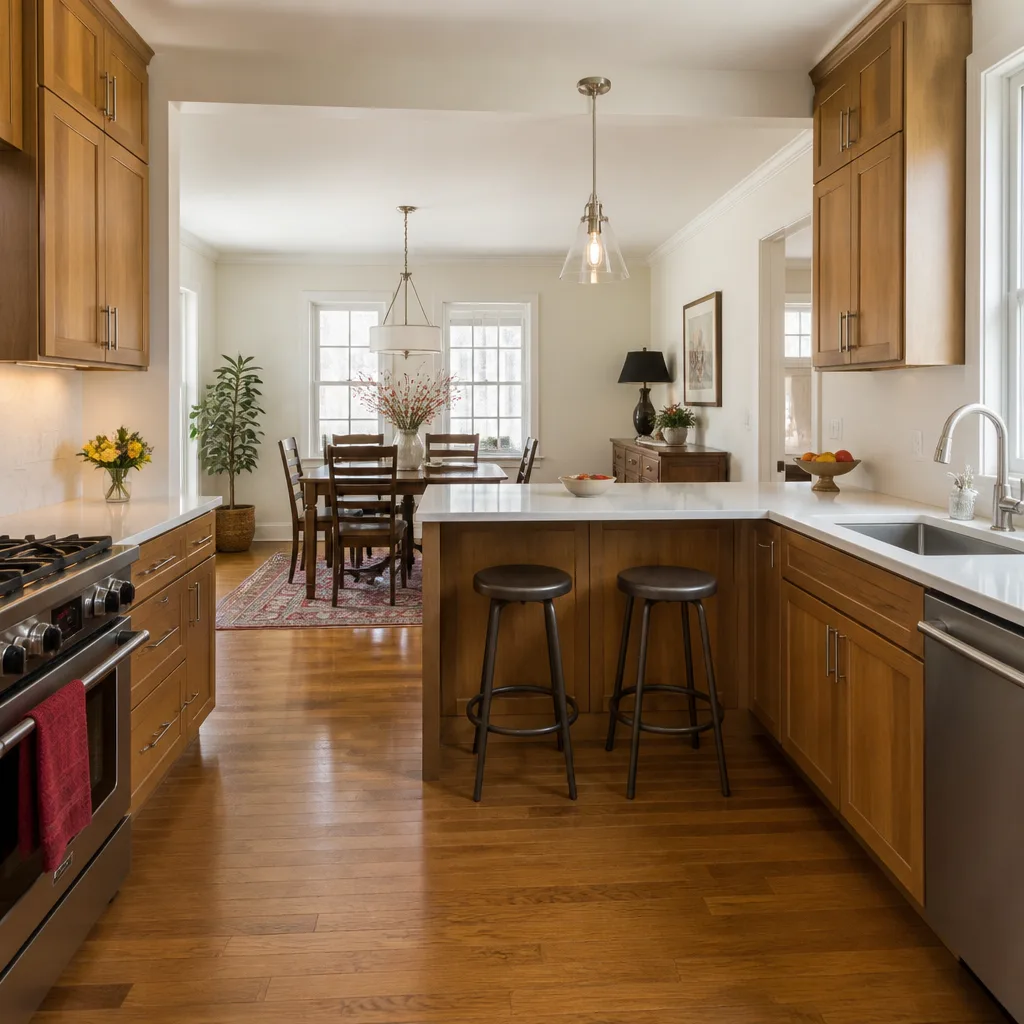
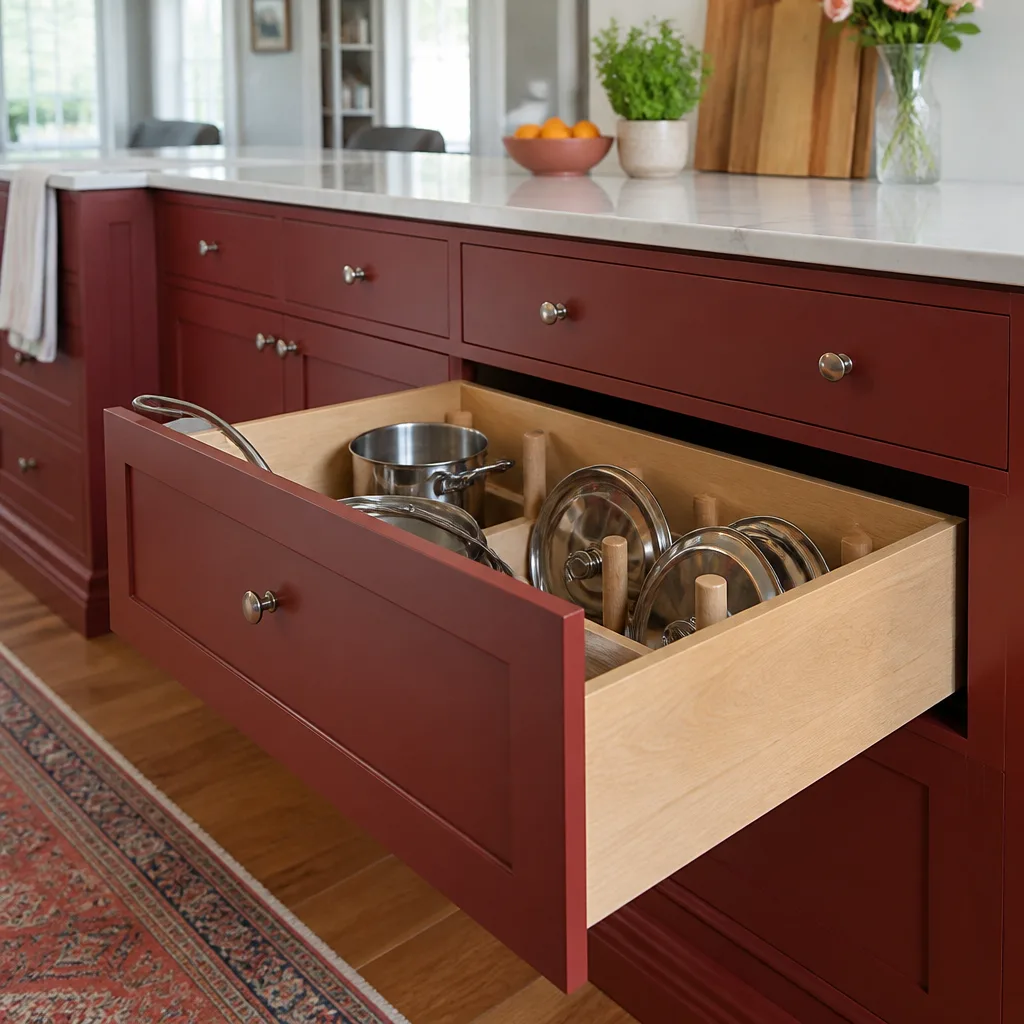
What drives the number: the condition of the slab underneath, the square footage of tile being pulled, the cabinet line you choose (we install KraftMaid and Wellborn, both of which carry their own warranties alongside our work), and whether we’re matching existing finishes or starting fresh. Every job gets a written price before any work starts – the number on day one is the number on the invoice. If the work fails inside a year, the 365-Day Done Right Promise means we come back and fix it at no charge, and that guarantee is on paper, not in a handshake.
DIY or Call Us?
You can safely check a few things yourself. Tap the tile to find hollow spots. Vacuum out a loose grout joint and look at what’s underneath – clean dry sand means the grout failed, damp dark material means moisture got behind the tile and there’s a bigger conversation. You can also check whether your countertop sealer still beads water by sprinkling a few drops on the surface; if it soaks in, the sealer’s gone.
Where DIY goes wrong is the pour and the bond. Mixing floor leveler too wet or too dry changes the cure, and a bad pour means ripping out tile you just paid to have set. Mortar work is less dangerous than electrical or gas, but it’s unforgiving – once thin-set cures, the only correction is demolition. If the slab under your Houston kitchen has moved, the fix isn’t a thicker layer of leveler; it’s understanding why it moved. That’s where a site visit earns its keep. Call us at (254) 527-5340 and we’ll send a background-checked, uniformed technician to look at what you’ve got, take measurements, and hand you a written number – free.
FAQs
A properly prepped tile floor over Sakrete underlayment should last 20 to 30 years in a Houston kitchen, provided the slab was stable when the leveler went down and the right mortar was used. Failures we see are almost always prep failures, not product failures – the Sakrete line holds up when it’s spec’d correctly.
Yes, if the failure is localized – a few cracked tiles with good surround, a section of grout in one corner. We can cut out individual tiles, reset them, and regrout. But if the slab moved or the bond failed across a wide area, patching it buys you months, not years, and we’ll tell you that before we quote either path. Call (254) 527-5340 for an honest assessment.
A backsplash replacement or small tile repair runs one to two days. A floor leveling and full tile replacement runs three to five. A complete kitchen remodel – cabinets, counters, floors, backsplash – runs four to eight weeks depending on cabinet lead time and scope. We give you a written arrival window and a defined schedule before we start, and we stick to it.
We keep Sakrete floor leveler, polymer-modified thin-set, cement board, and sanded grout on our trucks for most kitchen jobs, along with the materials for KraftMaid, Cambria, and Silestone work. If we need a specialty mix, we source it same week from local Houston suppliers – and the parts line on your written quote reflects exactly what we’re installing.
Written by Trevor Nash, Owner, Penhallow Remodeling Houston at Penhallow Remodeling Houston, serving Houston and nearby areas.


