
Free written scope consultation - allowances, timeline, and change-order rules on paper before a single trade is scheduled
Sterling Home Additions & ADU: The Houston Owner’s Guide
If you have a Sterling home addition or ADU and something has failed, we can help. Penhallow Remodeling Houston matches and installs Sterling-compatible components, with typical project work in Houston running $45,000 to $130,000 depending on scope. Most owners discover a problem the same way: a door that no longer closes square, a crack running up a wall that wasn’t there last summer, or water showing up where it shouldn’t after a heavy rain. You need someone who can tell you what failed, why, and what it costs to fix before any work starts.
We’re an independent general contractor in Houston, not a Sterling dealer or affiliate. That matters because our job is to fix the problem, not sell you a brand. We work with Sterling-built additions and ADUs regularly, and we know the weak points specific to how these structures perform in Houston’s climate and soil. Trevor Nash, our owner, has spent enough time on slabs and additions in this city to know that what fails first is rarely what the homeowner thinks.
Key takeaways:
- Typical Sterling home addition or ADU repair and renovation work in Houston runs $45,000 – $130,000 installed
- We write the price before work starts, and that number holds
- Every project carries our 365-Day Done Right Promise in writing
- Call (254) 527-5340 for a free estimate on your Sterling addition or ADU
Which Sterling Models This Applies To
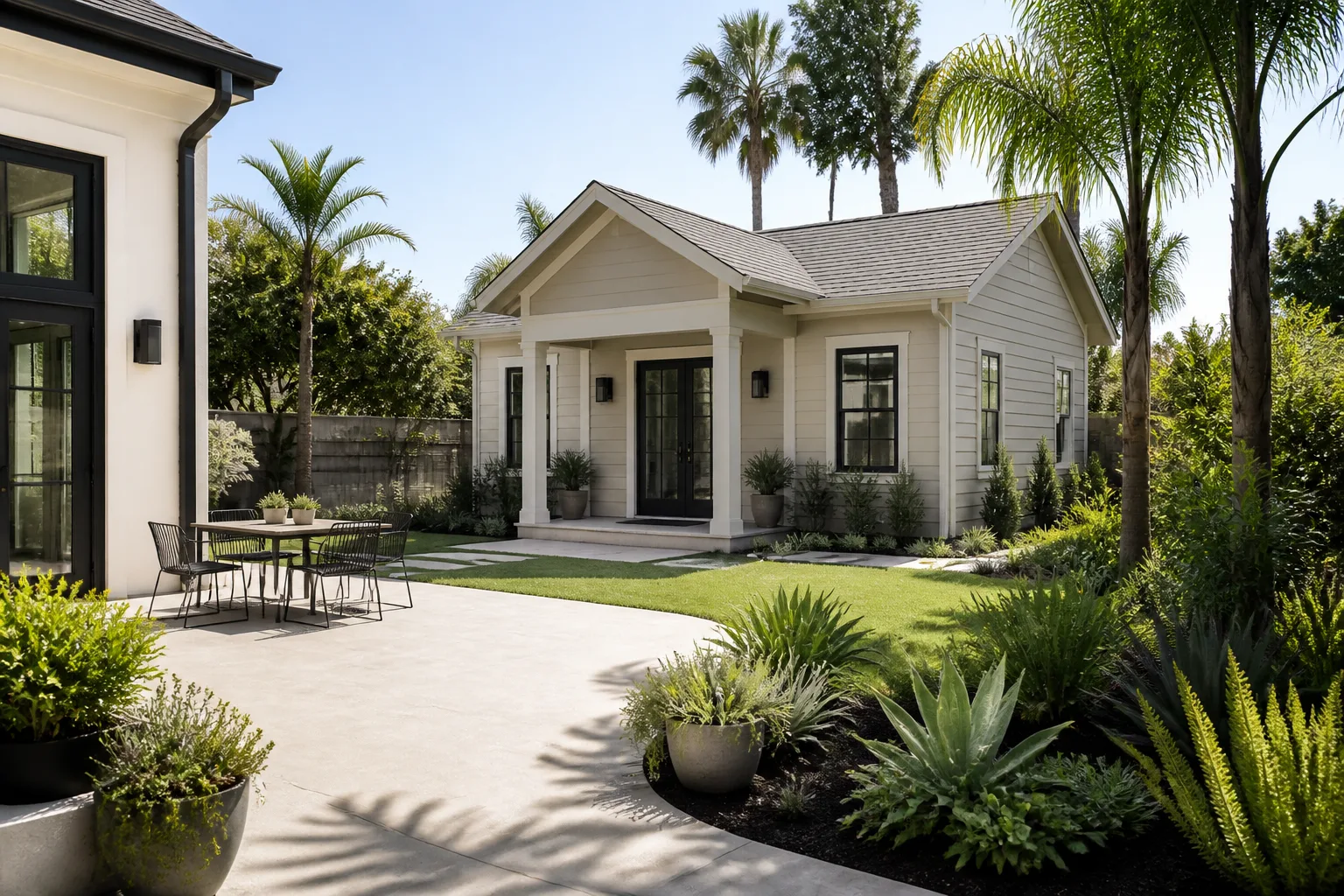
Sterling home additions and ADUs in Houston span a wide range of construction years and methods, so the first step is identifying what you actually have. Most Sterling-branded additions built in the last fifteen years use a slab-on-grade foundation, which in Houston means the structure sits directly on soil that expands and contracts with moisture. That’s not a defect, but it is the single biggest factor in how these additions age here.
When we assess a Sterling addition or ADU, we look for the identifying details that tell us what we’re working with: the foundation type, the wall framing, the roof tie-in to the main house, and any manufacturer labels on doors, windows, or utility panels. Older Sterling additions often used different flashing details at the roofline where the addition meets the original structure, and that seam is where we see the most water intrusion in Houston. If you have any original plans or permits, bring them out. If not, we can usually determine the construction method from the attic, the slab edge, and the electrical panel.
OEM components versus quality aftermarket equivalents is a real decision here. For structural elements like beams, headers, and foundation repairs, you want materials that meet or exceed the original spec. For finish items like doors, windows, and fixtures, aftermarket options from trade brands like Therma-Tru, James Hardie, and Kohler often outperform the original fifteen-year-old Sterling components, and they carry their own manufacturer warranties. We’ll walk you through that decision line by line before we quote anything.
Styles & brands we work with







Signs Your Sterling Home Additions & ADU Is Failing
- Sticking doors or windows. When a door that used to close fine suddenly rubs the jamb at the top, that’s usually slab movement. Houston’s clay soil expands when wet and shrinks in drought. The door isn’t broken – the structure around it shifted.
- Diagonal cracks at window or door corners. These are the classic sign of differential settlement. A small crack at one corner of a window that grows over a season means one part of your addition is settling faster than another. We see this regularly in Meyerland and other Houston neighborhoods with significant soil movement.
- Water stains on ceilings or around the roof tie-in. The seam where a Sterling addition meets the original roofline is the most common leak point. Houston’s heavy spring and fall rains find any gap in the flashing. A stain after one storm is a warning; a stain after every storm is a failure.
- Drywall nails or screw heads popping through the finish. When you see a line of small bumps appear on a wall, the framing behind the drywall is moving. In Houston, this often means the addition was built without proper moisture barriers under the slab, and the framing is absorbing ground moisture.
- A floor that feels soft or slopes in one corner. Soft spots underfoot usually mean subfloor rot in a raised addition, or slab cracking in a slab-on-grade one. Either way, it won’t correct itself, and the longer it goes, the more extensive the repair.
Replacement Cost & What’s Included
Home addition and ADU repair work in Houston runs $45,000 to $130,000 installed. That’s a wide range because the work itself varies so much: a failing roof tie-in with minor framing repair sits at the low end, while adding square footage to a Sterling ADU or rebuilding a section of foundation sits at the high end. What drives the number up or down is the scope of structural work, the materials you choose, and whether we’re repairing existing space or building new space.
Here’s what typical project ranges look like in Houston:
| Project Type | Typical Houston Range |
|---|---|
| Home Addition (new build) | $45,000 – $130,000 |
| ADU Construction | $90,000 – $220,000 |
| Garage Conversion | $30,000 – $80,000 |
Every quote we write includes parts and labor, permits where required, and cleanup. The number we put in writing before work starts is the number on the invoice when we’re done – no change orders, no surprises. And every job carries our 365-Day Done Right Promise: if something we repaired fails within a year, we come back and fix it at no charge. If it’s something we installed that has a manufacturer warranty, like James Hardie siding or Therma-Tru exterior doors, you get that coverage layered on top of ours.
See the difference
 Before
 After
After Before
 After
After Before
 After
AfterDIY or Call Us?
Real talk: most of what fails on a Sterling addition or ADU in Houston is not DIY territory. Foundation movement, roof tie-in flashing, framing repairs – these are structural issues where a shortcut makes the problem worse and costs you more to fix properly later. Houston’s soil conditions don’t forgive improvised fixes, and water intrusion in a wall cavity compounds quickly in our humidity.
What you can safely do is document what you’re seeing. Take photos of the cracks, note when the water shows up and where, track whether the sticking door is better or worse after a dry spell. That information helps us diagnose faster, which saves you money on the front end. What you shouldn’t do is open up a wall or pull back flashing to explore – once you open the envelope, you’ve changed the conditions, and you want a trained professional looking at the actual exposed framing before anyone starts guessing.
If you want an honest assessment without any pressure, call (254) 527-5340. Trevor will walk the property with you and tell you what’s actually going on. Give me the straight story on what you need, and I’ll give you the straight number on what it costs.
FAQs
A properly built Sterling addition or ADU should last as long as your main house, but Houston’s expansive clay soil and humidity mean some components fail earlier. Roof tie-ins and flashing typically need attention around the 15- to 20-year mark. Slab movement is an ongoing reality in this market, not a one-time event. With regular maintenance, the structure itself should last decades.
Most problems can be repaired rather than rebuilt. Foundation leveling, flashing replacement, and targeted framing repair address the most common failures we see. Rebuilding makes sense when the water damage has compromised enough structure that repair costs approach new-construction costs. We’ll give you the straight comparison before you decide. Call (254) 527-5340 for an exact assessment.
A focused repair like a roof tie-in or flashing replacement typically takes two to five days. Larger structural work, like foundation repair or adding square footage, runs four to ten weeks depending on scope and the city’s permit schedule. We give you a written timeline with your written price, and we build in real arrival windows, not vague “sometime next month” promises.
We don’t stock Sterling-brand structural components, because structural elements are built to spec for each project. What we do stock is the materials we use most often on these jobs: flashing, moisture barriers, fasteners, and common framing components from trade brands like James Hardie. For finish elements like doors and windows, we order Therma-Tru and other quality aftermarket brands that fit the opening, and we confirm the measurements ourselves before anything gets ordered.
Get a Straight Answer on Your Sterling Addition or ADU in Houston
If something on your Sterling addition or ADU is cracking, leaking, or not working the way it should, the fix starts with an honest look at what’s wrong. Penhallow Remodeling Houston gives you a written price before any work starts, shows up in the window we gave you, and stands behind the work for a full year. Call (254) 527-5340 to schedule your free estimate. A real person answers, 24/7.
Written by Trevor Nash, Owner, Penhallow Remodeling Houston at Penhallow Remodeling Houston, serving Houston and nearby areas.


