
Free written scope consultation - allowances, timeline, and change-order rules on paper before a single trade is scheduled
Tuff Shed Home Additions & ADU: The Houston Owner’s Guide
If you’re planning to convert or expand a Tuff Shed structure into livable space in Houston, you’re looking at $45,000 – $130,000 for a home addition tied to an existing structure, and $90,000 – $220,000 for a full ADU built to code. Those numbers include foundation work, framing, electrical, plumbing, insulation, and finish-out, and we’ll put that figure in writing before the first board comes off the shed. Most Houston owners come to us after realizing their Tuff Shed was never built for what they now want it to be: the floor joists can’t carry a bathroom, the wall cavities aren’t deep enough for real insulation, and the roof structure wasn’t engineered for drywall and a mini-split.
That’s not a knock on Tuff Shed. It’s just the truth about what those buildings are and aren’t. Penhallow Remodeling Houston is an independent contractor; we’re not affiliated with Tuff Shed. What we do is take what you already have, tell you straight what it’ll take to make it a legal, comfortable living space, and put a written price on that work.
Which Tuff Shed Structures This Applies To
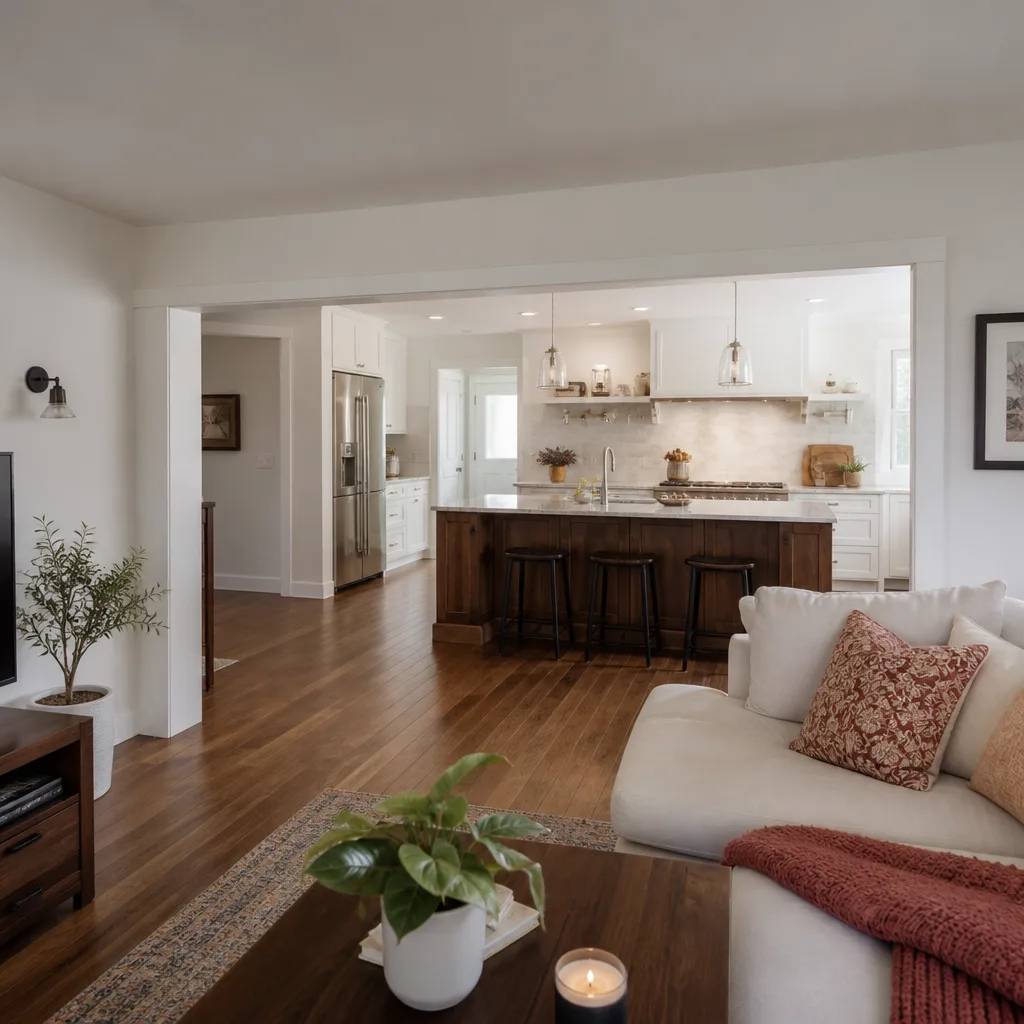
Tuff Shed builds a wide range of storage buildings, garages, and cabins, and the path to a home addition or ADU depends heavily on which one you have. The Premier series garages and barns are the most common candidates we see in Houston, because they carry a heavier roof load and often have taller wall heights. The garden sheds and utility buildings, by contrast, sit on treated wood runners or a thin slab, and those need significant structural work before anyone sleeps in one.
Here’s the compatibility gotcha most owners don’t know: Tuff Shed buildings are engineered for storage and occasional workshop use, not for the live-load requirements of residential space. That means the floor system, roof trusses, and wall studs typically need to be reinforced or replaced outright to pass a Houston building inspection. We check three things first: the foundation type (slab, runners, or piers), the wall stud spacing and dimension (many Tuff Sheds use 2x4s on 24-inch centers, where residential code wants 2x6s on 16), and the roof structure’s ability to carry drywall, insulation, and HVAC. Aftermarket reinforcement kits exist, but for a structure that will become living space, we almost always recommend pulling the interior skin off and reframing to residential standards. It costs more up front and fails less later.
If you’re also pricing materials for the interior finish-out, we source from recognized trade brands: KraftMaid cabinetry, Cambria and Silestone countertops, and James Hardie siding where exterior upgrades are needed. Those products carry their own manufacturer warranties, layered with ours.
Styles & brands we work with







Signs Your Tuff Shed Home Additions & ADU Is Failing
Most of the structures we assess in Houston show the same handful of problems. If you’re seeing any of these, the building is telling you something about how far it can be pushed.
- Doors that stick or won’t latch during spring and fall. Houston’s expansive clay soil swells and shrinks with moisture, and sheds on shallow foundations move with it. A door that only works half the year means the frame has racked.
- Soft spots in the floor, especially near the entry. Water wicks into the flooring at transitions. By the time you feel it, the subfloor is usually rotted through.
- Visible sag or dip in the roofline. Tuff Shed trusses aren’t designed for drywall weight. Adding insulation and ceiling material without reinforcing the trusses produces a bow you can see from the street.
- Condensation on the walls or a musty smell after rain. Uninsulated metal or T1-11 siding builds interior moisture against the wall cavity. That’s mold territory in a Houston summer.
- Electrical that trips at odd times. Sheds wired with a single 15-amp feed weren’t meant for a window unit, a refrigerator, and a microwave at the same time. If breakers trip when two appliances run together, the panel doesn’t have the capacity for living loads.
See the difference
 Before
 After
After Before
 After
After Before
 After
AfterReplacement Cost & What’s Included
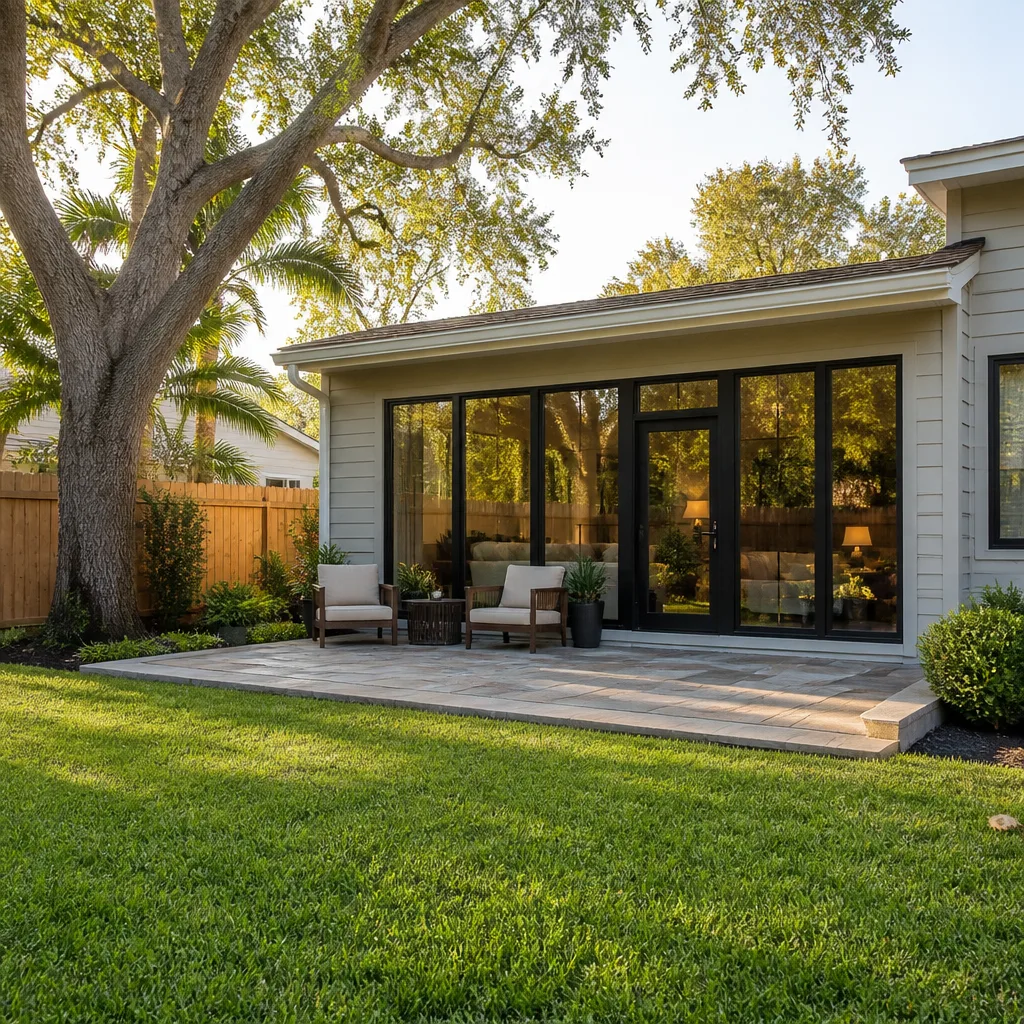
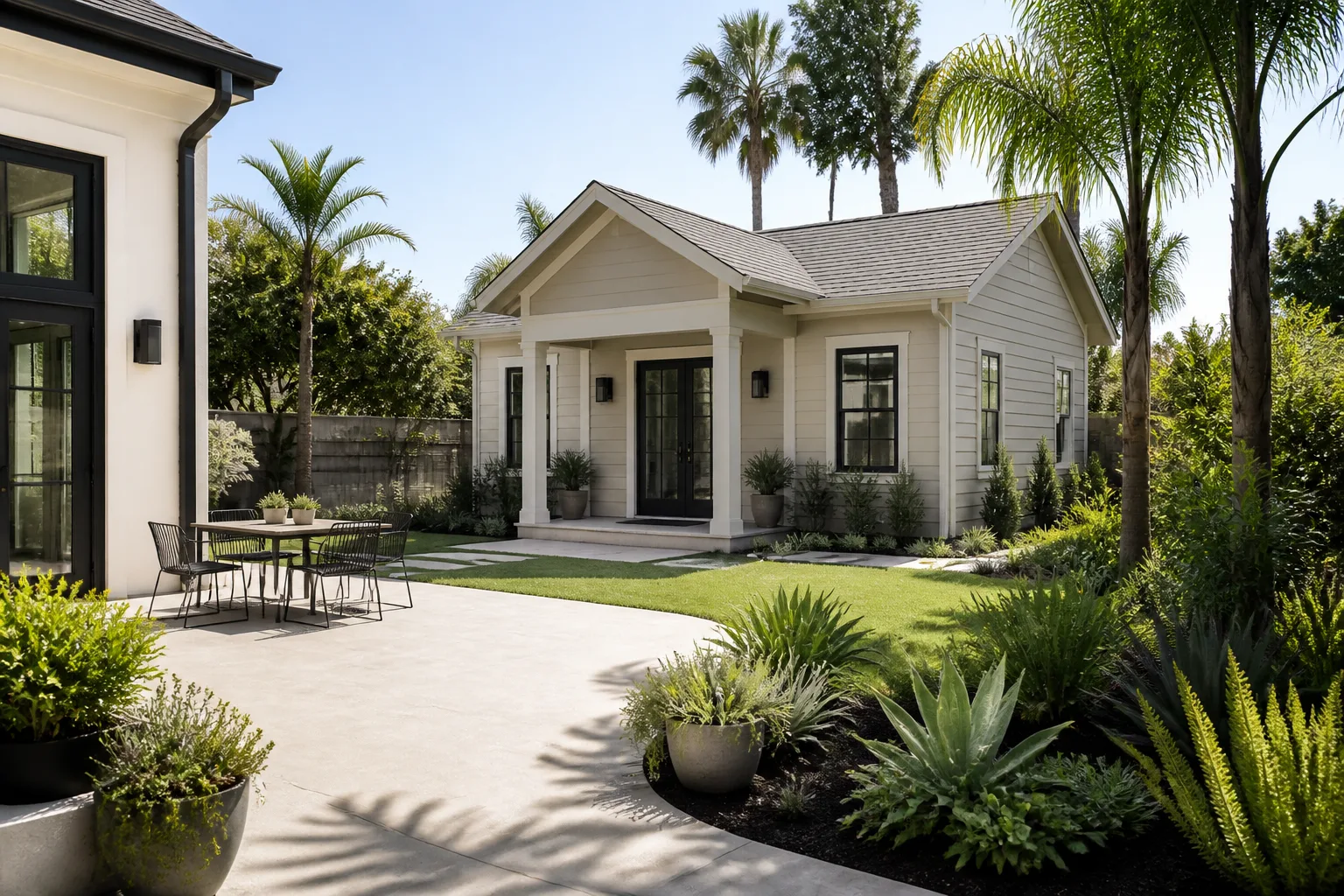
For a Tuff Shed conversion in Houston, the full project range runs $45,000 – $130,000 for a home addition scope, and a detached ADU built to residential code with its own kitchen and bath falls between $90,000 and $220,000. The range spans that wide because of foundation work. A shed on a compacted gravel pad with pressure-treated runners needs a real foundation poured, and that single line item can swing the job by $15,000 or more depending on soil conditions.
Here’s the cost breakdown that drives the number:
- Foundation and site work: $8,000 – $25,000 depending on slab size, soil, and grading.
- Structural reframing and roof reinforcement: $10,000 – $28,000.
- Electrical, including a new subpanel and permit work: $6,000 – $16,000.
- Plumbing rough-in and fixtures (if adding a bath or kitchenette): $7,000 – $22,000.
- Insulation and drywall: $3,500 – $9,000.
- Interior finish-out (flooring, trim, paint, cabinetry): $8,000 – $30,000.
Every quote we write is a fixed price with every line item spelled out. Not an estimate range, not a ballpark. The number on day one is the number on the invoice, and it’s backed by our 365-Day Done Right Promise: if it’s not done right, we make it right, in writing, on every project.
DIY or Call Us?
We understand the urge to handle parts of this yourself, and some of it is genuinely safe to check. You can inspect the existing floor from underneath, look for standing water around the perimeter after a hard rain, and measure your wall studs to see what you’re starting with. What you shouldn’t do is pull wall sheathing out, cut into roof trusses, or run new electrical inside a structure you plan to live in. Those are the places where DIY attempts fail in Houston, sometimes badly. A truss that’s been notched to run a ceiling fan is a structural failure waiting for the next thunderstorm season.
If you’re even half-serious about converting a Tuff Shed into living space, the best thing to spend is one phone call. We’ll walk the structure with you, tell you what’s load-bearing and what isn’t, and hand you a written plan with a number you can hold us to. Call (254) 527-5340.
FAQs
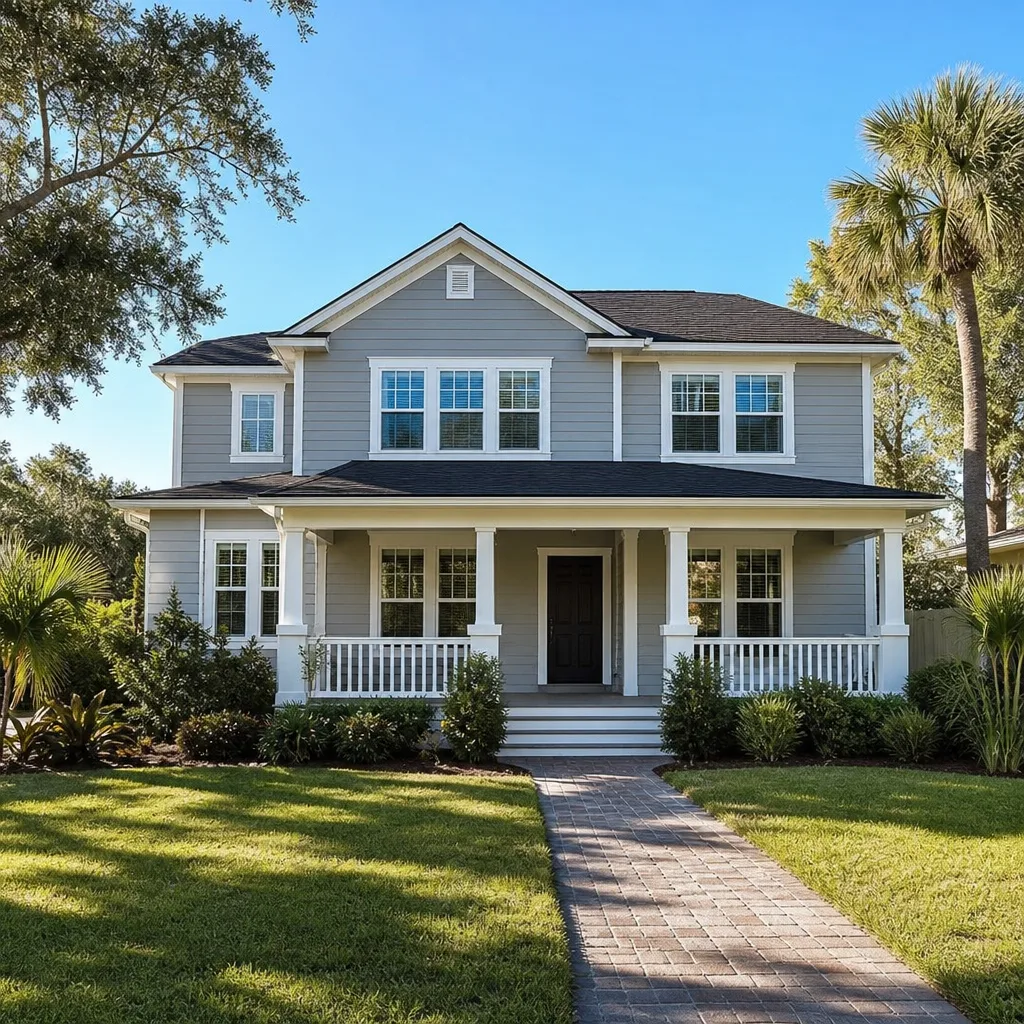
With proper foundation work, residential framing, and moisture control, a converted structure will last as long as any conventionally built addition: 40 to 60 years for the frame, with normal maintenance. The original shed materials are the weak point. T1-11 siding and builder-grade roofing last 15 to 25 years in Houston’s heat and humidity before they need replacement, which is why we factor exterior upgrades into most conversion quotes.
Sometimes, yes. If the foundation is sound and the wall framing is already 2×6, a repair-and-reinforce path can save you $8,000 – $15,000 compared to a complete reframe. But if the floor system is on runners over bare ground, or the roof trusses are already showing sag, repair is throwing money at a structure that will keep fighting you. We’ll tell you which situation you have, and we’ll show you the numbers for both paths. Call (254) 527-5340 for an assessment and written quote.
A garage-style Tuff Shed conversion typically takes 6 to 10 weeks from permit approval to final inspection. A full ADU with kitchen and bath runs 10 to 16 weeks. We give you a written schedule with a start date and an arrival window before any work begins, and that schedule is part of the written agreement, not a verbal promise.
Yes. Every conversion and ADU we build is permitted through the City of Houston, and all inspections are passed before we call the job complete. We pull the permits, schedule the inspections, and include the fee line items in your written quote. You won’t chase down a single piece of paperwork.
Call Trevor and the team at Penhallow Remodeling Houston at (254) 527-5340 for a free, written estimate on your Tuff Shed home addition or ADU. We’ll come out, look it over, and give you the straight number before you spend a dollar.
Written by Trevor Nash, Owner, Penhallow Remodeling Houston at Penhallow Remodeling Houston, serving Houston and nearby areas.


