
Free written scope consultation - allowances, timeline, and change-order rules on paper before a single trade is scheduled
Unilock Home Additions & ADU: The Houston Owner’s Guide
Unilock-compatible home additions and ADU projects in Houston typically run $45,000 to $130,000 installed, depending on square footage, foundation work, and the Unilock product line you’re matching. Most full additions and ADU builds take 8 to 16 weeks from permit to final walkthrough, and the single biggest variable in Houston is what’s under the slab. We regularly see owners in Meyerland, Westbury, and Spring Branch call us after a previous contractor skipped the soil analysis entirely, and six months later the new room’s slab has settled enough to crack the drywall. That’s the moment they call Penhallow Remodeling Houston to find out what actually went wrong and what it costs to fix it right.
Here’s the straight story: if you already have a Unilock paver patio, walkway, or retaining wall and you’re planning an addition or ADU that ties into it, the Unilock material itself isn’t the issue. The substrate and drainage underneath it are. Houston’s gumbo clay expands and contracts with every wet season, and any addition that meets existing Unilock hardscape without proper separation and drainage will fail at the seam. That’s the part owners discover too late. We’ll explain exactly what to look for below, what it costs to replace or rebuild, and how to know whether you’re dealing with a cosmetic fix or a structural problem.
Which Unilock Models This Applies To
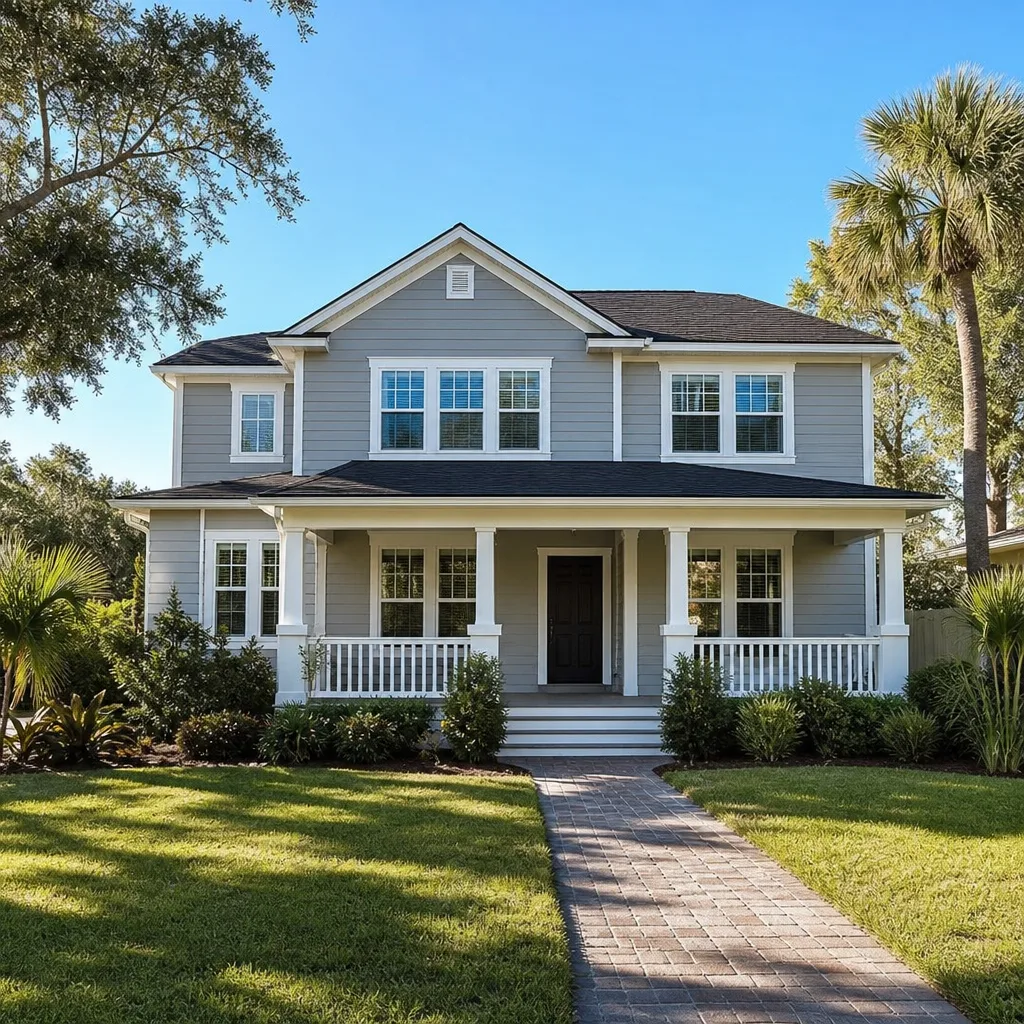
Unilock doesn’t make “home additions” in the sense of wall panels or roof systems. What Unilock makes is exterior hardscape: pavers, retaining walls, and patio systems that are often the first point of contact for an addition or ADU. When we reference Unilock compatibility on an addition or ADU project, we’re talking about how the new structure meets, surrounds, or incorporates existing Unilock product. The most common Unilock lines we see in Houston yards are the Brussels Block and Mattoni paver series for patios and walkways, and the Lineo Dimensional Stone or Rivercrest Wall units for raised planters and retaining sections that butt against a new addition’s foundation wall.
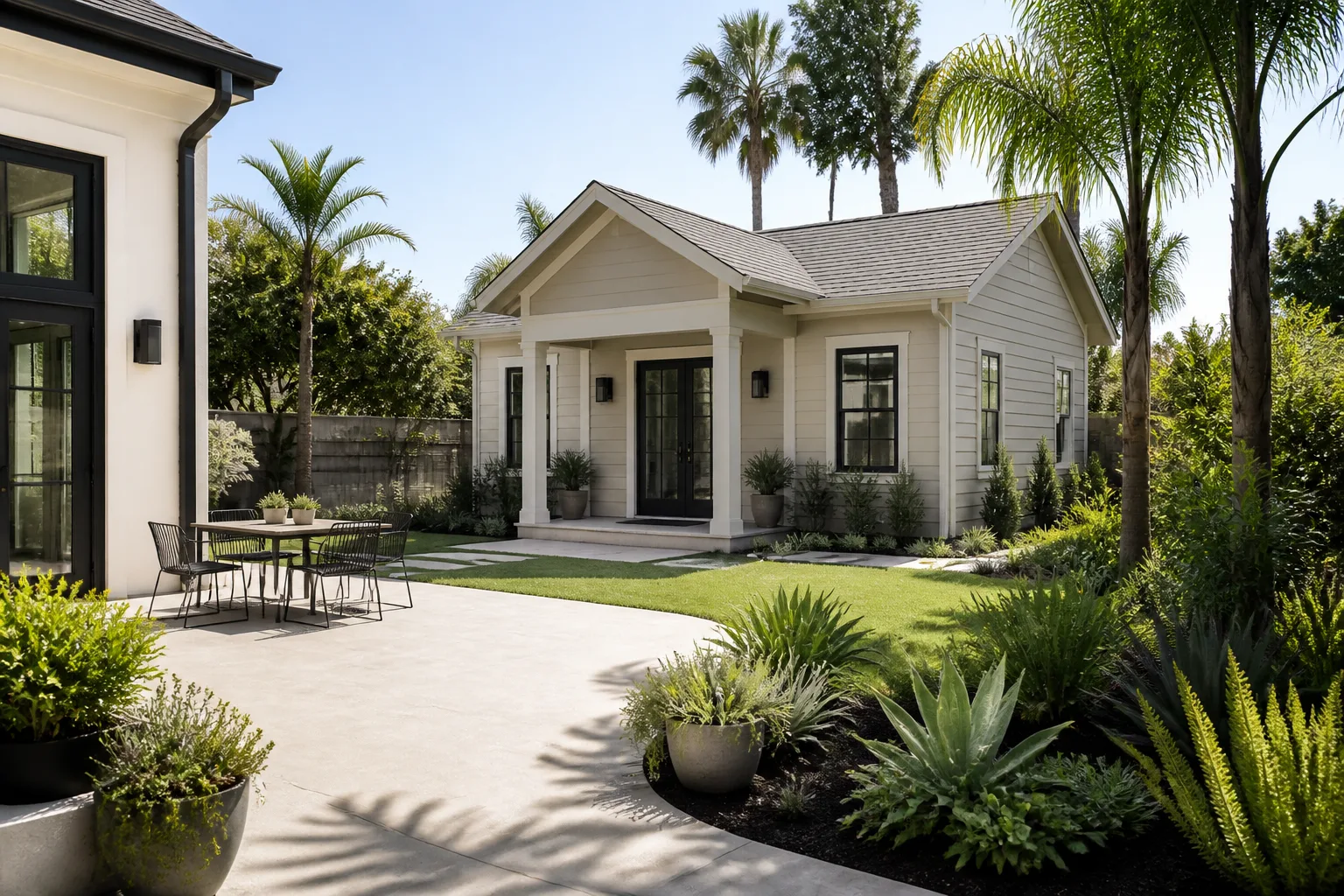
The compatibility gotcha is pavers versus slabs. If your Unilock patio was installed over a compacted aggregate base (which is standard for pavers), you cannot simply pour a concrete addition slab directly against it and expect the two to behave. Concrete moves as a single rigid mass. Pavers move independently. Where they meet, you need a proper edge restraint, a flexible joint, or a deliberate transition strip, otherwise the seam will open up within the first two Houston rainy seasons. The second gotcha is wall height. Any Unilock retaining wall over three feet that’s structurally tied to an ADU foundation requires an engineered design, because the soil behind it isn’t just holding up your yard. It’s holding up a building. We work with a local Houston structural engineer on these designs, and we bring the stamped plans to the permit office before we ever break ground.
We also stock and install products from other recognized trade brands on the same project: KraftMaid cabinetry for ADU kitchens, Cambria or Silestone countertops, and the plumbing fixtures that finish a secondary unit. The Unilock part of the job is the exterior connection, and it has to be right before the interior matters.
Styles & brands we work with







Signs Your Unilock Home Addition or ADU Connection Is Failing
- A visible gap between the addition’s slab or stem wall and the Unilock pavers. This means the pavers have shifted because the edge restraint wasn’t properly installed or the base material has washed out. In Houston, the freeze-thaw cycle is mild, but our heavy spring rains do the real damage by eroding the sand and aggregate underneath.
- Pooling water against the addition wall after rain. Unilock pavers sit on a permeable base, but if the grade wasn’t pitched away from the structure, water collects at the seam and eventually wicks into the sill plate or slab edge. Standing water at the connection point for more than a few hours after a storm means drainage failed.
- Pavers near the addition have dropped or created a trip hazard. This usually traces back to inadequately compacted soil or base material at the transition. Additions add weight and change water flow, and the ground underneath responds.
- Rot or staining at the bottom edge of siding or trim where the Unilock meets the wall. This is a sign water has been splashing back against the structure, often because the pavers are at the wrong elevation relative to the wall’s weep screed or sill.
- Cracks radiating from the corner of the addition slab toward the Unilock area. This suggests differential settlement: the new concrete is moving at a different rate than the surrounding hardscape. In Houston’s expansive clay, this is the single most common cause of failure at the addition-to-paver connection.
See the difference
 Before
 After
After Before
 After
After Before
 After
AfterReplacement Cost & What’s Included
In Houston, the cost to properly rebuild or repair the Unilock connection on an existing addition or ADU ranges from $3,500 to $11,000 for the hardscape portion alone, depending on the linear footage involved, the base depth required, and whether the existing pavers can be salvaged. If the underlying concrete slab or foundation edge has failed, you’re looking at $45,000 to $130,000 for a full addition rebuild, which includes demolition, soil treatment, new slab work, and reinstallation of the Unilock interface. A full ADU construction project runs $90,000 to $220,000, which covers the structure, the site work, and the hardscape tie-in done correctly the first time.
| Scope of Work | Typical Houston Price Range |
|---|---|
| Unilock-to-addition seam repair (paver reset, edge restraint, drainage correction) | $3,500 – $11,000 |
| Full addition with Unilock tie-in | $45,000 – $130,000 |
| ADU construction with Unilock hardscape integration | $90,000 – $220,000 |
| Garage conversion with exterior paver connection | $30,000 – $80,000 |
Every one of those numbers comes with a written line-item price before we start. No verbal ballpark that changes at the door. The written estimate includes the base material depth we’re actually going to dig, the exact Unilock product we’re matching or replacing, the labor at a fixed rate, and the permit costs if the job requires them. The 365-Day Done Right Promise applies to every project: if the work fails inside the first year, we come back and make it right at no charge. You’ll know the number before we pick up a shovel, and you’ll know what the guarantee covers because it’s written on the same page as the price.
DIY or Call Us?
Here’s the honest split. You should absolutely walk your property and look for the five signs above before calling anyone. A homeowner can spot a gap, a low spot, or standing water with zero training, and being able to describe exactly what you see over the phone saves everyone time. You can also check the general grade around your addition with a simple level to see if the ground is sloping away from the structure the way it should.
What you should not do is start pulling up Unilock pavers and rebuilding the base yourself. The risk isn’t just that the repair fails. It’s that you misdiagnose the cause. If the problem is actually settlement under the addition slab, no amount of paver resetting fixes it, and you’ve spent a weekend and several hundred dollars on base material that didn’t address the real issue. More importantly, if there’s any water intrusion at the wall line, you’re dealing with potential mold, framing rot, or a failing sill plate that gets worse while you’re looking at pavers. Foundation-adjacent work on an occupied structure in Houston’s clay soil is a job for a contractor who’s seen this exact failure dozens of times. We have. Call (254) 527-5340 and we’ll walk you through what we’re seeing from your photos and set up a site visit if it warrants one.
FAQs
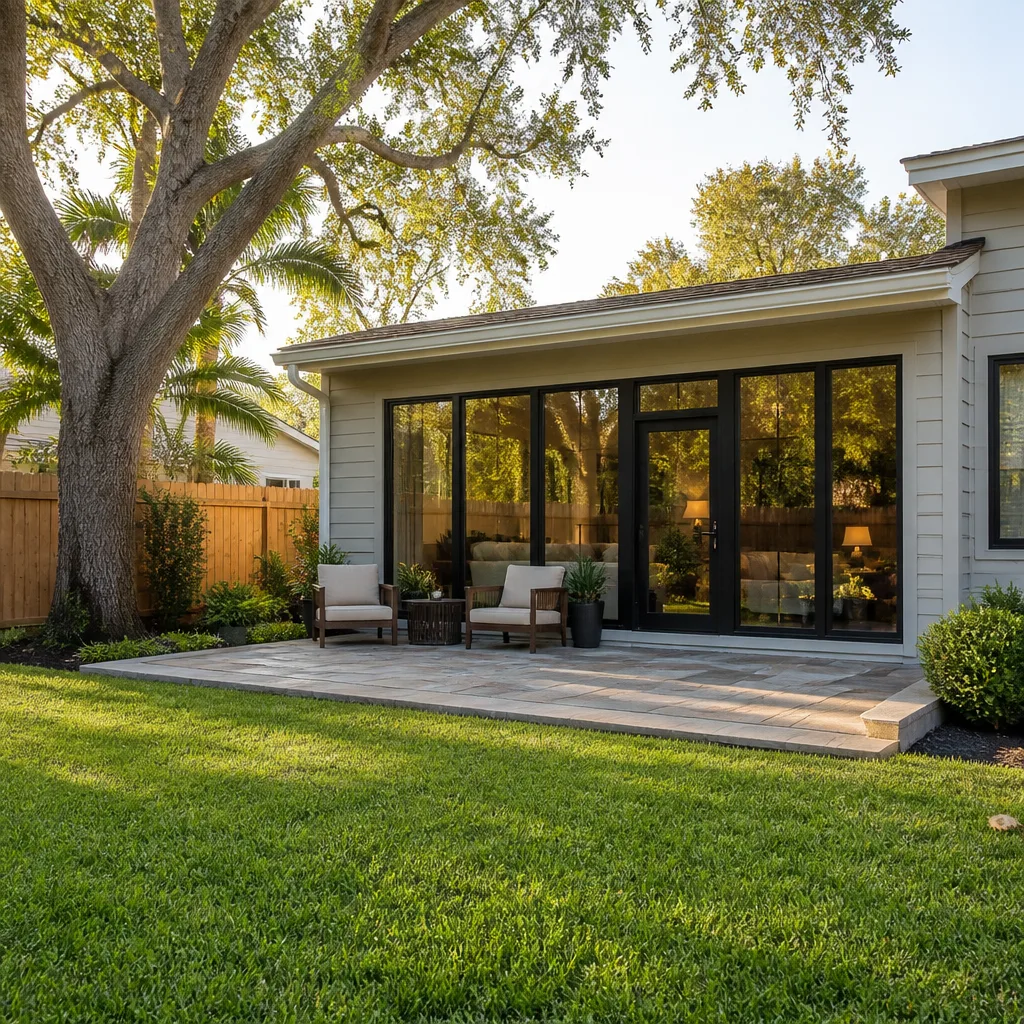
A properly installed Unilock paver connection to a home addition or ADU in Houston should last 15 to 25 years with no major repairs, assuming the base was compacted correctly and drainage was designed for our clay soil. The pavers themselves last decades, but the base and edge restraint are the components that fail first here, typically within the first three to five years if the original install cut corners. Call (254) 527-5340 and we’ll give you a straight read on yours.
Yes, in most cases the hardscape connection can be repaired independently of the addition structure, which keeps the cost in the $3,500 to $11,000 range for the paver and drainage work. If the addition’s slab has actually cracked or settled, the repair scope grows significantly. The only way to know which one you’re dealing with is a site inspection, but the written quote spells out both scenarios before any work starts.
A typical repair takes 2 to 4 working days for demo, base rebuild, drainage correction, and paver reinstallation, assuming weather cooperates. Houston’s summer thunderstorms can stretch that by a day or two, but we’ll give you a defined arrival window and keep you updated the whole way. We don’t give vague timelines and we don’t disappear mid-job.
We maintain relationships with local Unilock dealers in the Houston area and can source matching product for most active and recently discontinued lines, including Brussels Block, Mattoni, and Rivercrest Wall. Some colors weather and fade over time, so we’ll bring physical samples to the site to match the existing patina before we order. We’ll also tell you honestly if the line has been discontinued and what the closest available match is, with the price difference written out.
If you’ve got a Unilock connection that’s failing, or you’re planning an addition or ADU that will meet existing hardscape, give us a call. Trevor Nash and the Penhallow Remodeling Houston crew will give you the straight story on what’s wrong, what it costs, and exactly how long it’ll take. No pressure, no vague numbers. Call (254) 527-5340 for a free estimate, and we’ll put the price and the guarantee in writing before a single paver gets pulled.
Written by Trevor Nash, Owner, Penhallow Remodeling Houston at Penhallow Remodeling Houston, serving Houston and nearby areas.


