
Last updated October 15, 2026
Free written scope consultation - allowances, timeline, and change-order rules on paper before a single trade is scheduled
Construction Cost Breakdown: The Houston Homeowner’s Reference for 2026
The average kitchen remodel estimate in Houston now spans $25,000 to $80,000. That spread is so wide it tells you almost nothing useful. The reason for the gap isn’t contractor dishonesty. It’s that four specific variables, cabinet line, layout changes, electrical panel condition, and what’s actually behind your walls, swing the number more than anything else, and most estimates never separate them. This guide gives you the real numbers for Houston in 2026, explains what moves them, and shows you how to read a written estimate so the number on day one is the number on the invoice. For more guides & resources, visit our blog.
Quick Answer
Houston construction costs in 2026 are shaped by three forces most cost guides don’t price separately: skilled-trade labor tightness in the post-Harvey and post-COVID market, ongoing volatility in lumber and copper pricing, and the hidden cost multipliers that kick in once walls open on older Houston homes. Expect a kitchen remodel to land between $25,000 and $80,000, a bathroom between $12,000 and $35,000, and a whole-home renovation between $80 and $175 per square foot. The single most effective way to control your final number is to get a written price with a defined scope before demolition starts, because that’s where the biggest budget leaks occur.
Styles & brands we work with







Table of Contents
- Kitchen Remodel Costs in Houston: The Numbers That Matter
- Bathroom Remodel Costs: What Houston Homes Actually Require
- Whole-Home Renovation Costs: A Square-Footage Framework That Works
- Room Addition Costs: Foundation, Flood Zones, and the Fine Print
- Outdoor Living Costs: The Houston Climate Factor
- The Houston-Specific Factors National Guides Miss
- How to Read a Written Estimate: Firm Prices vs. Allowances
- The Change-Order Economy: How Underbid Projects Recover Margin
Kitchen Remodel Costs in Houston: The Numbers That Matter
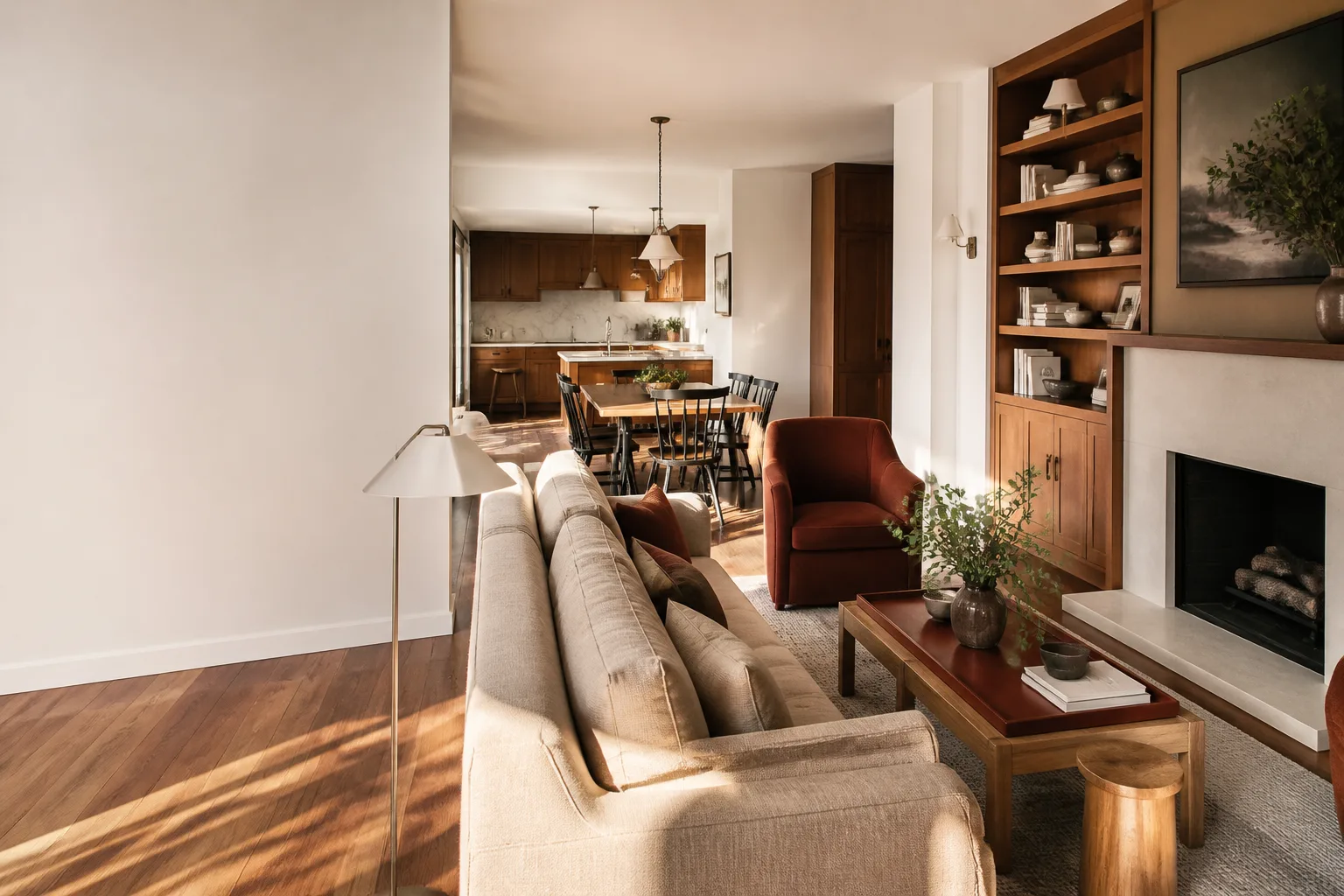
A full kitchen remodel in Houston typically runs $25,000 to $80,000 in 2026, with the median landing around $42,000. The spread is driven by four variables that deserve a closer look before you sign anything.
Cabinet line is the biggest single mover. Stock cabinets from a big-box supplier can keep the cabinet portion under $8,000. Semi-custom lines like KraftMaid or Wellborn push that to $15,000 to $25,000 depending on door style, finish, and storage hardware. Custom cabinetry starts at $30,000 and climbs. The difference is not just appearance. It’s drawer hardware, box construction, finish durability, and whether the doors will still align five years after installation.
Layout changes are the quiet budget killer. Moving a sink or range means relocating plumbing and gas lines. That’s an extra $2,500 to $6,000 before you’ve picked a single finish. In pier-and-beam Houston homes, access underneath makes this easier than in slab construction, but you’re still paying a licensed plumber Texas rates, which have stayed elevated since Harvey. If you can keep the sink, range, and refrigerator in their current positions, you can redirect that money into better cabinets or countertops.
Countertop material costs in Houston run roughly $45 to $95 per square foot installed for quartz. Cambria, Silestone, and Caesarstone are the lines we install most often, and each carries its own warranty alongside ours. Natural stone like granite or marble lands in a similar range but requires sealing and is more prone to staining in a kitchen that actually gets cooked in. For a typical 40-square-foot countertop surface, expect $1,800 to $3,800 depending on the slab and edge profile.
Electrical panel condition is the variable nobody mentions until the electrician opens the wall. Houston homes built before 1990 often have 100-amp panels that cannot support modern kitchens with induction cooktops, double ovens, and dedicated circuits for appliances. Upgrading to a 200-amp panel is a $2,000 to $4,500 line item before any kitchen wiring happens. It’s not optional if you’re adding appliances, but many estimates omit it until the electrical inspection flags it.
Houston Kitchen Remodel Cost Benchmarks for 2026
- Entry-level kitchen refresh (same layout, stock cabinets, laminate tops): $18,000 – $25,000
- Mid-range kitchen (semi-custom cabinets, quartz tops, some layout changes): $32,000 – $48,000
- High-end kitchen (full layout change, custom or premium semi-custom cabinets, high-end quartz or stone, panel upgrade): $55,000 – $90,000+
If you’re planning a kitchen project this year, start with our Kitchen Remodeling in Houston page, which walks through the process and the written-price commitment we make before any work begins.
Bathroom Remodel Costs: What Houston Homes Actually Require
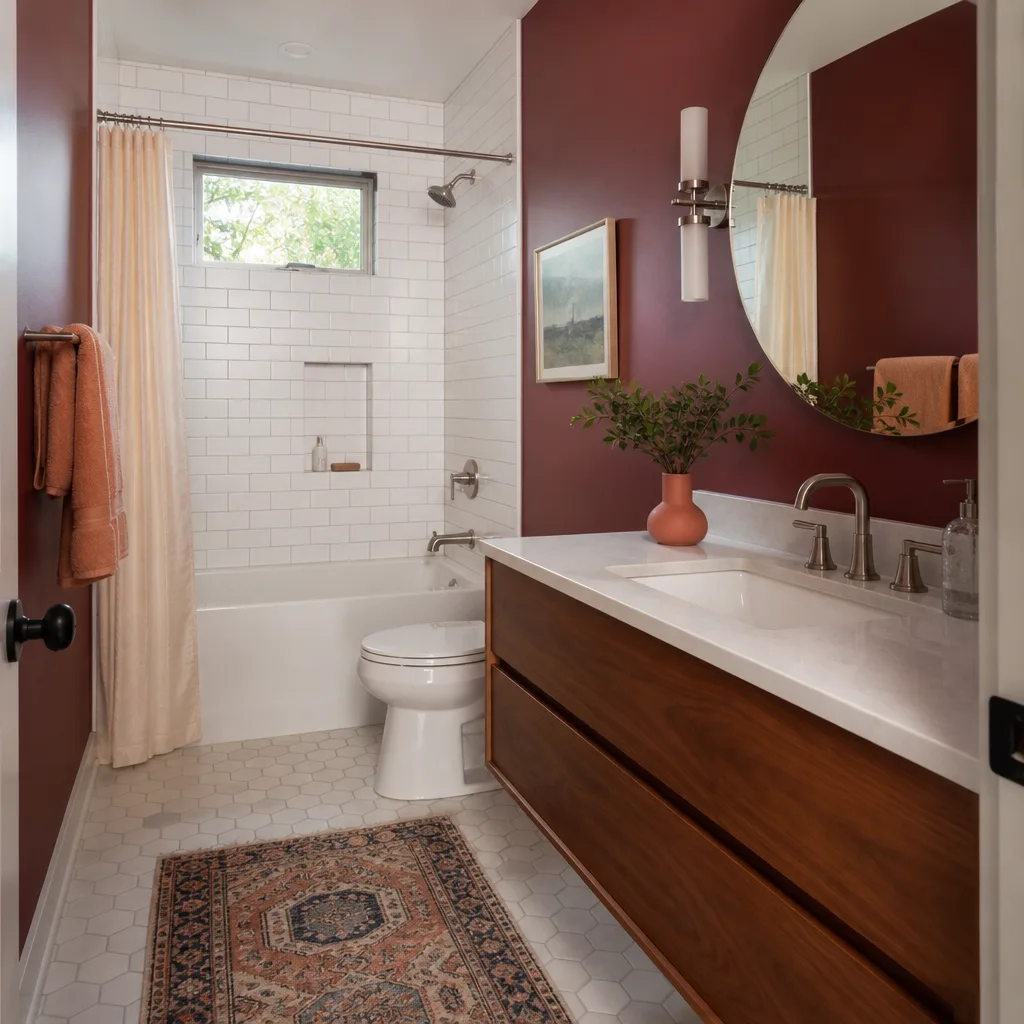
Bathroom remodels in Houston run $12,000 to $35,000 in 2026, with the median around $20,000. The range is tighter than kitchens because bathrooms are smaller, but the percentage spread is wider because the condition of the substrate, the moisture-resistant layer behind your tile, dictates how much demolition and rebuild is actually required.
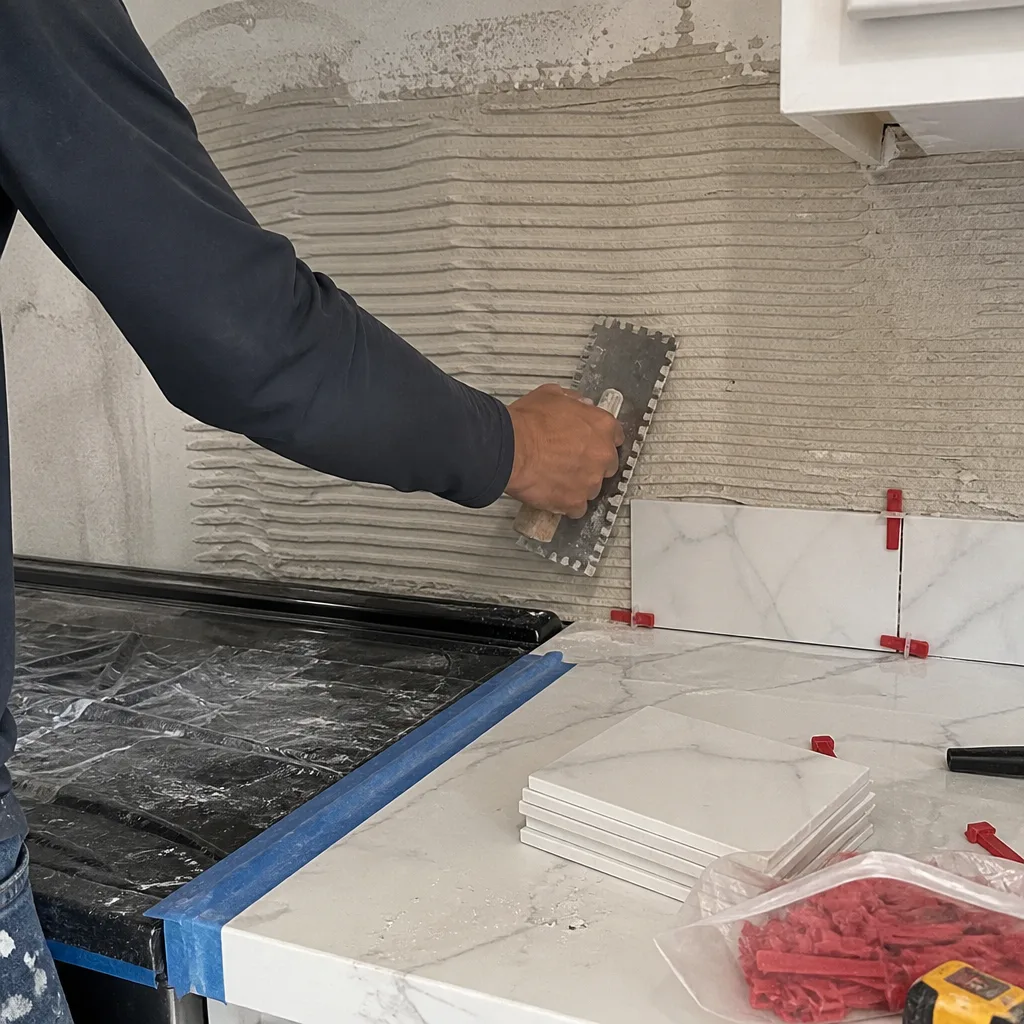
In older Houston homes, particularly those built before 1980, we regularly find water damage behind tub surrounds and shower walls. The tile looks fine from the outside. The cement board substrate behind it has been absorbing moisture for decades and has started to fail. Once the tile comes off, the real scope reveals itself. Replacing rotted framing and installing new substrate adds $1,500 to $4,000 to a shower remodel, and it’s work that cannot be skipped or patched over. Any contractor who tells you the tile can go back over the old substrate without checking it first is giving you a number that will change. For a full rundown of red flags, see Construction Warning Signs: A Houston Homeowner’s Reference Guide.
Line-Item Benchmarks for a Standard Houston Hall Bath
- Demolition and disposal: $800 – $1,500
- Tub or shower replacement with new valve and surround: $3,500 – $7,000
- Vanity replacement (semi-custom, 36-48 inch): $1,800 – $3,500
- Quartz or solid-surface countertop: $600 – $1,200
- Flooring (tile or luxury vinyl, 40-60 square feet): $1,200 – $2,800
- Fixtures from Kohler or Moen: $400 – $1,500
- Plumbing and electrical labor: $2,000 – $4,000
- Paint and finish work: $400 – $900
Houston humidity makes bathroom ventilation a code and comfort issue, not a nice-to-have. If your bath fan vents into the attic instead of outside, you’re recirculating moist air into a space that’s already humid ten months out of the year. Proper exterior venting adds $300 to $700 and prevents mold issues that cost thousands later. For the full scope of what a bathroom project involves here, see our Bathroom Remodeling in Houston guide.
Whole-Home Renovation Costs: A Square-Footage Framework That Works
Whole-home renovations in Houston run $80 to $175 per square foot in 2026, but that range only means something if you understand what’s included in the floor and what’s excluded. The metric works reasonably well for gut-and-rebuild projects where the entire home is being brought to the same finish level. It actively misleads when applied to partial renovations, because the expensive rooms (kitchen, bathrooms) skew the average so far from the cheap rooms (bedrooms, hallways) that the blended number tells you nothing about your actual project.
Here’s the framework we use when we’re at a kitchen table giving a homeowner their first real number.
- Determine your finished square footage. Not the footprint. The finished, heated and cooled space you’ll actually be renovating. A 2,000-square-foot ranch renovated down to the studs at $110 per square foot is $220,000, and that’s the right ballpark.
- Separate the high-cost rooms. A kitchen is worth $300 to $500 per square foot of its own footprint. Bathrooms are $400 to $700 per square foot. Use those numbers for those rooms, then apply the $80 to $175 range to the remaining living space. The blended math is far more accurate than applying one number across the whole house.
- Add the systems cost separately. Electrical panel upgrades, HVAC replacement, and plumbing repiping are not included in per-square-foot ranges. They’re $8,000 to $25,000 line items depending on house size and condition, and they cannot be deferred in a full remodel.
- Add 10 to 15 percent for the unknown. In a home older than 30 years, you will find rot, old wiring, or plumbing that was never to code. Budgeting for it up front is cheaper than a change order at week six.
For a more detailed walkthrough of what a whole-home project entails in Houston, our General Contractor in Houston page covers the process from first visit to final walkthrough.
Room Addition Costs: Foundation, Flood Zones, and the Fine Print
Room additions in Houston run $150 to $300 per square foot all-in for a standard bedroom or family room addition in 2026. That number includes foundation work, framing, roofing, electrical, HVAC tie-in, drywall, flooring, and finish. If you’re in a flood zone, add 15 to 25 percent for elevation compliance and the additional engineering review required before a permit is issued.
The foundation variable is the biggest Houston-specific factor. Pier-and-beam additions are generally less expensive to add onto because the new framing can be built to match the existing crawlspace access. Slab-on-grade additions require tying new concrete into the existing slab, which adds $3,000 to $8,000 depending on soil conditions and access. Houston’s expansive clay soils mean foundation engineering is not optional. A soils report is $1,500 to $3,000, and the pier depth or slab design follows from it.
Flood zone compliance deserves its own line item. If your property sits in a designated flood zone (check FEMA maps for zones AE or VE, common in Kingwood, Meyerland, and parts of the Energy Corridor), your addition must meet elevation requirements. That can mean raising the finished floor, adding flood vents to crawlspace walls, or both. The cost varies by lot and design, but $10,000 to $30,000 on top of a standard addition is common. This is not a corner you can cut, and a contractor who waves it away is one to cross off your list.
Outdoor Living Costs: The Houston Climate Factor
Outdoor living projects in Houston run $8,000 for a simple covered patio extension to $80,000+ for a full outdoor kitchen with pergola, built-in grill island, and paver patio. The Houston climate shapes these projects more than any design trend. You’re building for nine months of heat and humidity and three months of variable cool weather, so the materials and the shade structure matter more than the furniture.
Covered patio extensions are the most common outdoor project we see in Houston, and for good reason. A roof over the patio creates usable space from April through October, when an uncovered patio is too hot to sit on before 7pm. Expect $8,000 to $20,000 for a 200 to 300 square foot covered extension, depending on whether you’re tying into the existing roofline or building a freestanding structure.
Paver patios from lines like Belgard or Unilock run $12 to $25 per square foot installed in Houston. The base preparation is the part that determines whether the pavers shift in a decade. Houston’s clay soil expands and contracts with moisture, and a poorly prepared base shows up as uneven pavers within three to five years. A proper install excavates 8 to 10 inches, installs a compacted aggregate base, and uses a bedding layer before any paver goes down. If an estimate doesn’t mention base depth, ask.
Outdoor kitchens with built-in grills, a sink, and stone or stucco-clad islands run $18,000 to $50,000 in Houston. The plumbing and electrical runs from the house drive the cost as much as the finish materials do. A grill island placed 40 feet from the house requires a gas line extension and possibly a dedicated electrical circuit, both of which add $1,500 to $4,500 before you pick countertops.
The Houston-Specific Factors National Guides Miss
National cost guides pull averages from markets that don’t share Houston’s building conditions. Here are the factors that actually move your number here.
Pier-and-Beam Foundation Access
Roughly 40 percent of Houston homes built before 1970 sit on pier-and-beam foundations, and that access underneath the house changes the cost of plumbing work. Running a drain line under a pier-and-beam home can be $500 to $1,500 cheaper than the same work under a slab, because the plumber doesn’t have to tunnel or cut concrete. But the access also means the floors flex, and leveling work is common. If your floors slope, $3,000 to $10,000 in shimming and joist repair may be required before tile or hardwood goes down. National guides miss this entirely.
Licensed Electrician Markup from Post-Harvey Demand
Texas licensed electricians have been in short supply since Hurricane Harvey in 2017, and the tightness has persisted through the COVID remodeling boom and into 2026. Houston electrical labor runs 20 to 40 percent higher than the national average for the same work. A panel upgrade that costs $2,800 in Dallas might run $3,400 in Houston. This isn’t price gouging. It’s a simple supply-and-demand reality in a market where licensed trades are still stretched. When you see electrical line items on your estimate, expect them to run higher than any national guide suggests.
Flood-Zone-Compliant Elevation Requirements
If your renovation adds square footage or changes the foundation, and your home sits in a mapped flood zone, the city requires elevation compliance. This can mean raising the finished floor, installing flood vents in crawlspace walls, or both. The engineering review alone is $1,500 to $4,000. Construction costs vary by lot and design. What matters is that this requirement never appears on a national cost guide, because it’s a Houston-specific regulatory reality.
Clay Soil and Foundation Movement
Houston’s gumbo clay swells when wet and shrinks when dry, and that movement is why foundation repair is a year-round industry here. Any remodeling project on an older home should include a foundation assessment before work starts. If piers have settled, $5,000 to $15,000 in leveling may be required before new tile goes down, and it’s money well spent. New finishes over a moving foundation crack within a year, and no warranty covers that.
How to Read a Written Estimate: Firm Prices vs. Allowances
A written estimate is only as good as the specificity of its line items. The difference between a firm price and an allowance is the difference between a number you can hold a contractor to and a placeholder that will be adjusted upward once the real materials are chosen.
Firm prices are fixed-dollar amounts for clearly defined work. “Demolish existing kitchen to studs and dispose of debris: $3,200” is a firm price. The scope is clear, the number is fixed, and if the contractor underestimates, that’s their problem, not yours.
Allowances are budget placeholders for materials that haven’t been selected yet. “Cabinet allowance: $12,000” means the contractor has set aside $12,000 for cabinetry, but if you choose cabinets that cost $18,000, the $6,000 difference becomes a change order. Allowances consistently underestimate final cost by 15 to 30 percent, because homeowners almost always choose materials above the allowance once they’re standing in a showroom.
Here’s how to read an estimate like the document it is.
- Circle every allowance. Any line item labeled “allowance,” “budget,” or “placeholder” is not a firm price. Ask what specific product it’s based on, and ask what happens if the real product costs more.
- Check the scope language. “Install cabinet boxes and doors” is not the same as “install cabinets including hardware, trim, and crown molding.” If the scope is vague, the price is soft.
- Look for the exclusions list. A proper written estimate includes what’s not included. If there’s no exclusions section, you don’t actually know what the price covers.
- Confirm the payment schedule. A reasonable schedule ties payments to milestones: deposit, rough-in complete, drywall complete, final walkthrough. Never pay more than 10 to 15 percent as a deposit before work starts.
- Ask about the change-order process in writing. What’s the markup on change orders? What approval is required before work continues? If the answer is verbal, you don’t have an answer.
We put the price in writing before any work starts at Penhallow Remodeling Houston, because a verbal number you can’t hold anyone to is not a number at all.
The Change-Order Economy: How Underbid Projects Recover Margin
Houston’s remodeling market has a structural problem, and it costs homeowners money every year. It works like this: a contractor underbids the job to win it, knowing the number is too low. Then, once demolition starts and the walls are open, the change orders begin. The scope was vague, the estimate omitted needed work, and now the “unforeseen” issues require additional funds. The contractor recovers margin through change orders, and the homeowner pays more than if the original bid had been honest.
This is not hypothetical. We’ve inspected dozens of Houston remodels where the final invoice ran 30 to 50 percent above the signed estimate, and in nearly every case the original scope was vague enough that the changes were technically justified. The work was necessary. The price was not disclosed up front, and that’s the problem.
A fair change-order markup in Houston’s market is 10 to 15 percent on labor and materials for work outside the original scope. Markups above 20 percent are a red flag unless the work is genuinely emergency work, which any Houston contractor should explain and document. The protection against the change-order economy is a written scope with specific line items, a defined exclusions list, and a written change-order process that requires your signature before any additional work proceeds.
When we write a price at Penhallow Remodeling, it includes the scope, the exclusions, and the process for anything outside the scope. Say the price before the work. Show up in the window we gave. Leave the place cleaner than we found it. That’s the standard Trevor Nash runs this business on, and it’s the standard behind The Kingswell Way, established in 2004. Every job gets a written price up front and a written guarantee that covers the work for a full year with the 365-Day Done Right Promise: if it’s not done right, we make it right.
Common Mistakes to Avoid
- Signing an estimate without an exclusions list. If the document doesn’t say what’s not included, it doesn’t say anything. You’re signing a document with undefined boundaries, and the boundaries will be defined later at your expense.
- Comparing bids by total price alone. A $45,000 kitchen bid with allowances and a $58,000 bid with firm pricing are not comparable. The $45,000 bid will be $62,000 by the end if the allowances run true to market, which they almost always do.
- Deferring the electrical panel upgrade. In Houston homes built before 1990, the panel is nearly always undersized for a modern kitchen. Omitting it from the estimate doesn’t omit it from the project. It just delays the invoice.
- Skipping the foundation assessment on an older home. Houston clay soil moves. Tile over a settling foundation cracks within a year, and no warranty covers that. A $500 to $1,000 assessment tells you whether a $10,000 leveling job is in your future before demo starts.
- Paying a large deposit before work starts. A reasonable deposit is 10 to 15 percent. If a contractor asks for 40 percent to “buy materials,” you’re financing their last job’s overruns. Walk away.
- Ignoring flood zone status on additions. If your property is in a FEMA mapped zone (check Kingwood, Meyerland, Energy Corridor addresses), elevation compliance is mandatory and costly. It never appears on national cost guides, and it never disappears from the permit review.
- Choosing materials at the allowance stage without pricing the upgrade. The allowance was $12,000 for cabinets, and you chose $18,000 worth at the showroom. That’s a $6,000 change order you could have seen coming. Pick materials before signing the contract, or accept that the final number will move.
See the difference
 Before
 After
After Before
 After
After Before
 After
AfterWhen to Call a Professional
Not sure whether to tackle it yourself or hire out? Read our DIY vs Professional Construction: The Houston Homeowner’s Decision Guide first. Then call a contractor before you call an architect or designer in Houston if your project touches structural work, foundation access, flood zone compliance, or any system where a code inspection is required. The contractor’s estimate will tell you what the engineer and the designer need to address, and in which order. Call immediately if you see signs of foundation movement: cracks wider than a quarter inch, doors that stick seasonally, or tile that’s cracked along a consistent line. Those are conditions that require a professional assessment before any remodeling work begins.
Call if you’ve been burned before by a price that ballooned after demo day, or by a contractor who never showed when they said they would. You’re not looking for the cheapest bid. You’re looking for a written number and a written guarantee. Penhallow Remodeling Houston offers free estimates in Houston, and every estimate includes a written price and a written guarantee before any work starts. Call (254) 527-5340 to schedule yours.
Frequently Asked Questions
A full kitchen remodel in Houston runs $25,000 to $80,000 in 2026, with the median around $42,000. The spread is driven by cabinet line, layout changes, electrical panel condition, and what’s behind the walls once demolition starts. For a firm written number on your specific kitchen, call (254) 527-5340 and we’ll walk the project with you.
Whole-home renovations in Houston run $80 to $175 per square foot in 2026, but that metric only works for full gut-and-rebuild projects. For partial renovations, separate the kitchen and bathrooms (they run $300 to $700 per square foot of their own footprint) and apply the lower range to the remaining living space. Call (254) 527-5340 for a written estimate specific to your home’s condition and scope.
A bathroom remodel in Houston runs $12,000 to $35,000 in 2026, with the median around $20,000. The biggest variable in older Houston homes is the condition of the substrate behind the tile, which often requires replacement once the old tile comes off. Get a written price before demo starts by calling (254) 527-5340.
The variance comes from what’s included in the scope, whether materials are quoted as firm prices or allowances, and whether the contractor is pricing the electrical panel upgrade and foundation work that older Houston homes almost always require. A lower bid that omits these items will recover the difference through change orders once walls are open. Ask for a written scope with exclusions listed before comparing numbers.
It should not, if the estimate includes a written scope, a defined exclusions list, and a change-order process that requires your signature before any additional work proceeds. When we write a price at Penhallow Remodeling, the number on day one is the number on the invoice unless you approve a change in writing. Estimates are free. Call (254) 527-5340.
Yes. Permits are required for structural work, electrical, plumbing, and most additions in Houston, and we pull them and schedule the inspections as part of every project. The Kingswell standard means permits are pulled, inspections are passed, and the work is covered by a written guarantee. Call (254) 527-5340 to discuss your project.
The Bottom Line
Houston construction costs in 2026 are driven by three forces most guides don’t price separately: tight skilled-trade labor, volatile lumber and copper pricing, and the hidden multipliers that surface once walls open on older homes. A kitchen runs $25,000 to $80,000, a bathroom $12,000 to $35,000, a whole-home renovation $80 to $175 per square foot, and a room addition $150 to $300 per square foot. The number that matters is the one in writing, with a defined scope, firm line items, and a written guarantee behind it. That’s the number we give every homeowner before any work starts. Call (254) 527-5340 for a free estimate in Houston, and we’ll sit down at your kitchen table and go through the real numbers line by line.
Written by Trevor Nash, Owner at Penhallow Remodeling Houston, serving Houston since 2004.


